



Your cart is currently empty!
Herringbone, Chevron or Plank? Choosing a Waterproof Laminate Flooring Pattern

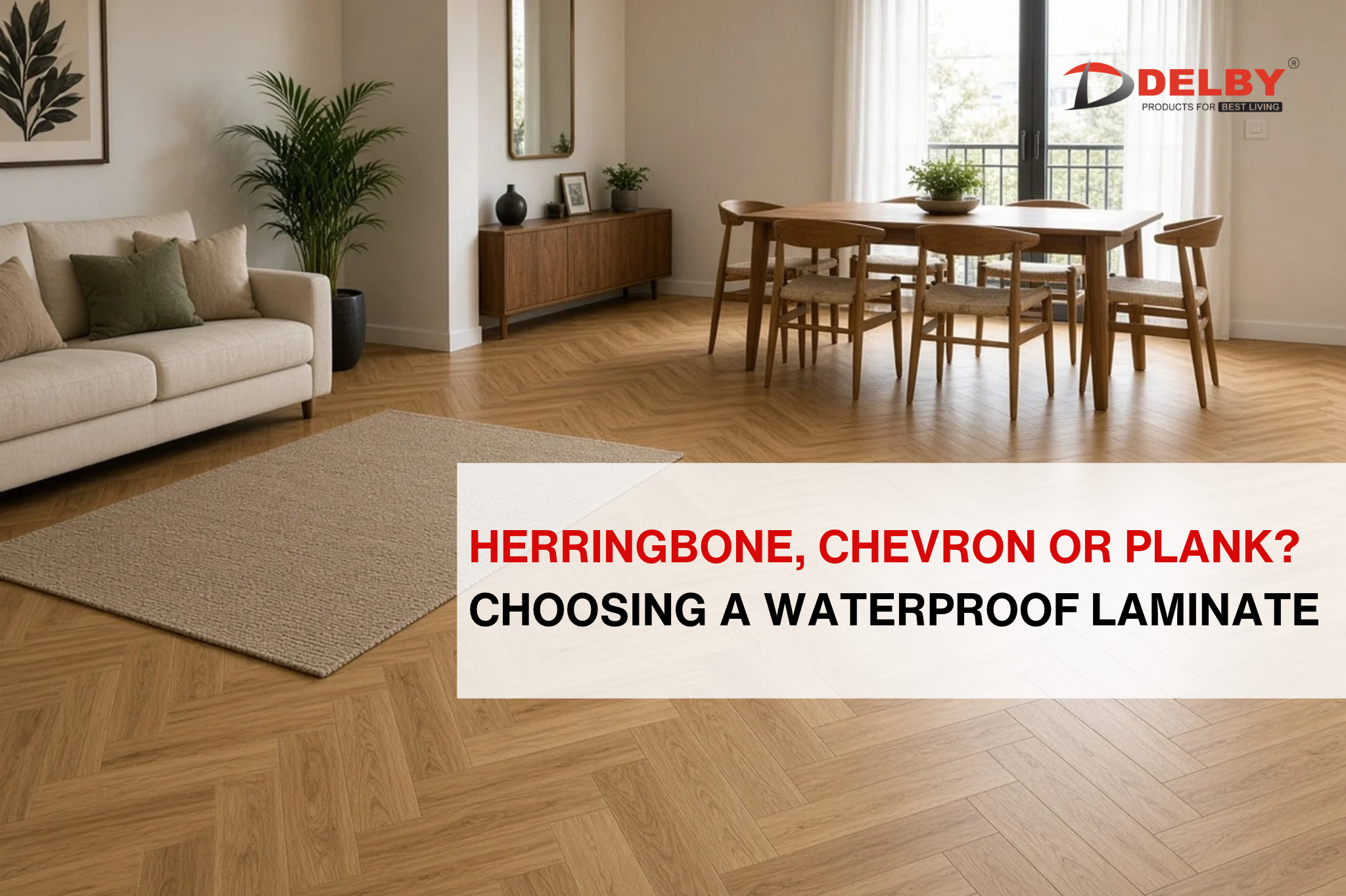
1. Introduction: Why Pattern Matters as Much as Performance
When choosing waterproof laminate flooring, visual impact and layout play as crucial a role as durability and moisture resistance. While water resistance ensures your floor stands up to everyday spills, pet accidents, and hallway traffic, the pattern defines the character, flow, and perceived dimensions of your room.
The pattern you select shapes how light bounces across the room, how wide or long a space feels, and whether a decor style comes across as classic, modern, or rustic. Today’s waterproof laminate options allow homeowners and interior designers to feature intricate lay patterns—such as Herringbone or Chevron—in moisture-prone areas like kitchens, entryways, and dining spaces where real hardwood was once impractical.
In this guide, we break down the three primary layout styles—Plank, Herringbone, and Chevron—compare their aesthetics and installation demands, address waterproof performance, and highlight common mistakes to help you select the ideal layout for your space.
2. The Three Big Patterns Explained
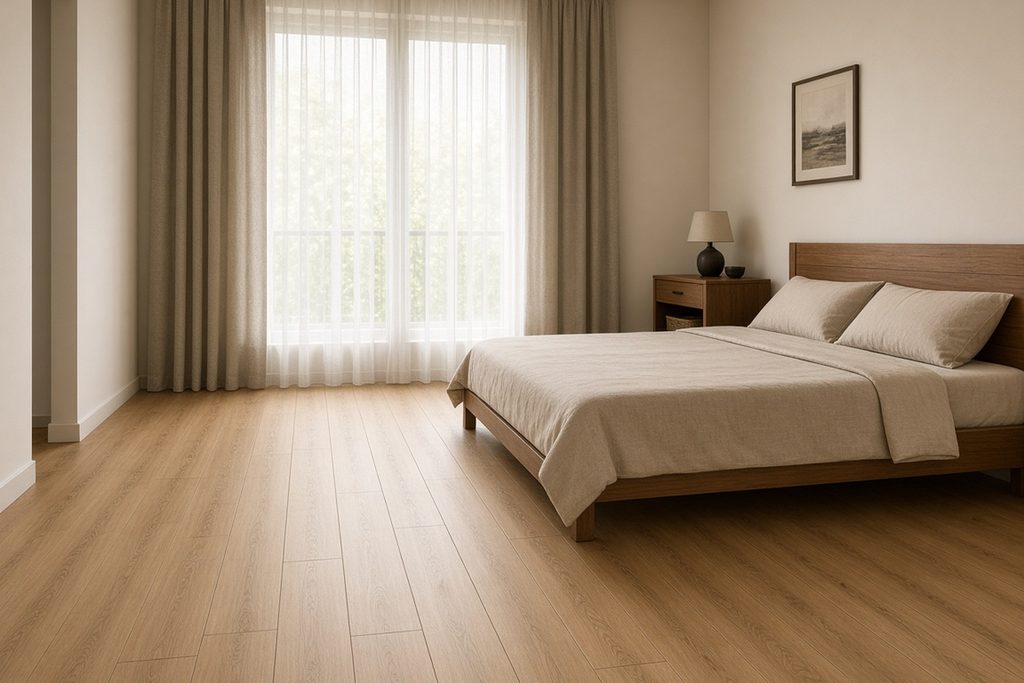
A. Standard Straight Plank Layout
The classic straight plank layout runs boards parallel to one another along the length or width of a room. It provides a clean, streamlined look that highlights the natural grain, tone, and character of wood without visual distraction.
- Visual Characteristics: Creates long, continuous lines that stretch a room visually, making narrow areas feel expansive and open.
- Best Architectural Styles: Complements Scandinavian minimalist designs, contemporary modern interiors, rustic farmhouses, and traditional family homes.
- Installation Complexity & Waste: The easiest layout to install with standard click-lock systems. Generates minimal waste (typically around 5% to 7%).
B. Herringbone Pattern
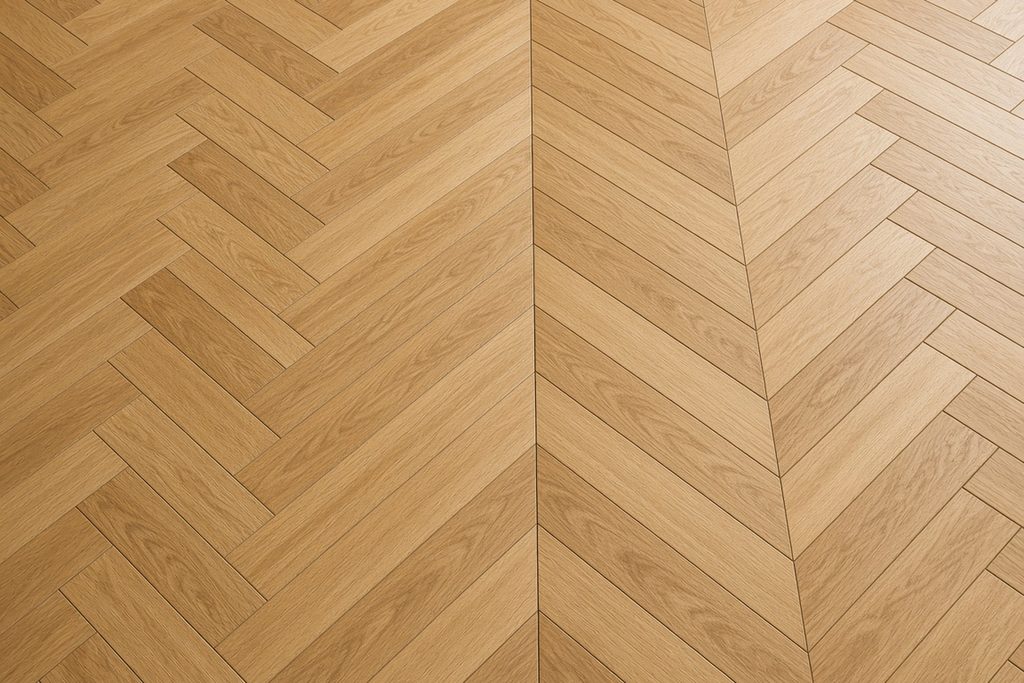
Herringbone features rectangular planks set in a staggered, 90-degree zig-zag pattern. The end of one plank aligns perpendicularly against the side of another, creating a dynamic, woven look reminiscent of classic European parquet.
- Visual Characteristics: Adds depth, texture, and movement. The shifting angles catch light differently across planks, creating a subtle two-tone effect.
- Best Architectural Styles: Ideal for luxury interiors, Parisian apartments, mid-century modern spaces, and formal dining areas. Check out the Herringbone (AC5) range for high-durability options.
- Installation Complexity & Waste: Requires precise alignment and specialized subfloor prep. Cutting along room edges results in higher material waste (around 10% to 15%).
C. Chevron Pattern
While often confused with Herringbone, Chevron planks are cut at an angle (usually 45 or 60 degrees) so that matching ends meet to form a clean, continuous “V” shape along a central axis.
- Visual Characteristics: Offers sharp geometric symmetry and strong directional sightlines that draw the eyes forward through a corridor or room.
- Best Architectural Styles: Elevates high-end residential interiors, modern luxury suites, and boutique commercial spaces. Explore the Chevron Series for pre-angled layout solutions.
- Installation Complexity & Waste: High installation precision is essential to maintain central axis symmetry. Expect waste levels around 12% to 15% due to angled perimeter cuts.
3. Matching Patterns to Real-Life Room Scenarios
Choosing the right layout depends on your room size, lighting, and floor plan layout:
- Small Rooms & Narrow Hallways: Straight planks running parallel to the longest wall elongate tight spaces. Alternatively, a fine-scaled Herringbone adds character to small entryways without overwhelming the area.
- Large Open-Plan Living Areas: Chevron and Herringbone patterns shine in large expanses where the complete geometric motif can unfold without being hidden by furniture.
- High-Traffic & Utility Zones: Standard straight planks offer seamless maintenance in kitchens, mudrooms, and corridors. Using water-resistant collections from the Delby Floors range ensures durability in active family areas.
4. What Makes Modern Laminate Waterproof?
When selecting pattern options in moisture-prone zones, understanding the underlying technology gives long-term peace of mind:
- Hydrophobic Core Boards: High-density fiberboard (HDF) cores are impregnated with water-repellent resins to minimize swelling upon liquid contact.
- Tight-Bevel Click Locking: Precision-engineered joint profiles create a tight surface seal that prevents standing water from seeping between planks into the subfloor.
- Wax-Sealed Edges: Specialized wax coatings applied to tongue-and-groove joints add an extra layer of liquid resistance.
5. Practical Considerations: Cost, Waste, & Maintenance
| Pattern Feature | Straight Plank | Herringbone | Chevron |
|---|---|---|---|
| Material Waste Factor | 5% – 7% | 10% – 15% | 12% – 15% |
| Installation Time | Fast / DIY-friendly | Moderate – High | High (Requires pro) |
| Labor Cost | Standard | Higher | Highest |
| Visual Impact | Classic & Clean | Textured & Elegant | Bold & Modern |
6. Common Mistakes to Avoid
- Underestimating Material Overage: Ordering standard 5% waste for Herringbone or Chevron layouts leaves you short during perimeter cuts.
- Ignoring Room Proportions: Placing large Chevron motifs in cramped rooms can make the area look cluttered rather than spacious.
- Skipping Subfloor Leveling: Intricate patterns require an extraordinarily flat subfloor to keep click joints aligned perfectly waterproof.
7. Quick Buying Checklist
- Confirm AC rating (AC4 or AC5 recommended for high-traffic zones).
- Verify water resistance warranty details and standing water exposure limits.
- Calculate correct waste percentage based on chosen pattern (Straight: 5-7%, Parquet/Pattern: 10-15%).
Select high-density underlayment suitable for laminate click locks.
8. Frequently Asked Questions (FAQs)
Q1: Can I install Herringbone or Chevron laminate flooring as a DIY project?
While standard straight plank laminate is very DIY-friendly, Herringbone and Chevron patterns require specialized alignment, precise center-line positioning, and accurate angled cuts along borders. Hiring a professional installer is recommended to ensure a tight, moisture-resistant fit.
Q2: Is waterproof laminate flooring suitable for kitchens and bathrooms?
Yes, high-quality waterproof laminate with hydrophobic core boards and sealed click locks is specifically designed to handle everyday kitchen spills, moisture, and bathroom splash zones when installed according to manufacturer guidelines.
Q3: How much extra material should I order for a Herringbone pattern?
For Herringbone and Chevron layouts, plan for a 10% to 15% waste factor to account for diagonal wall cuts and room boundary adjustments, compared to just 5% to 7% for standard straight planks.
Q4: What is the main difference between Herringbone and Chevron patterns?
Herringbone planks are standard rectangular boards set perpendicularly at 90 degrees to form a broken zig-zag pattern. Chevron planks are cut at an angle (usually 45 or 60 degrees) so they meet at a continuous central line, creating sharp “V” shapes.
Q5: What AC rating is recommended for residential waterproof laminate?
An AC4 rating is ideal for heavy-traffic residential areas like living rooms and hallways, while AC5 offers maximum commercial-grade durability against scratches, impact, and daily wear.
