



Your cart is currently empty!
PVC Wall Panels for Indian Homes: How to Choose the Right Panel and Avoid Installation Problems

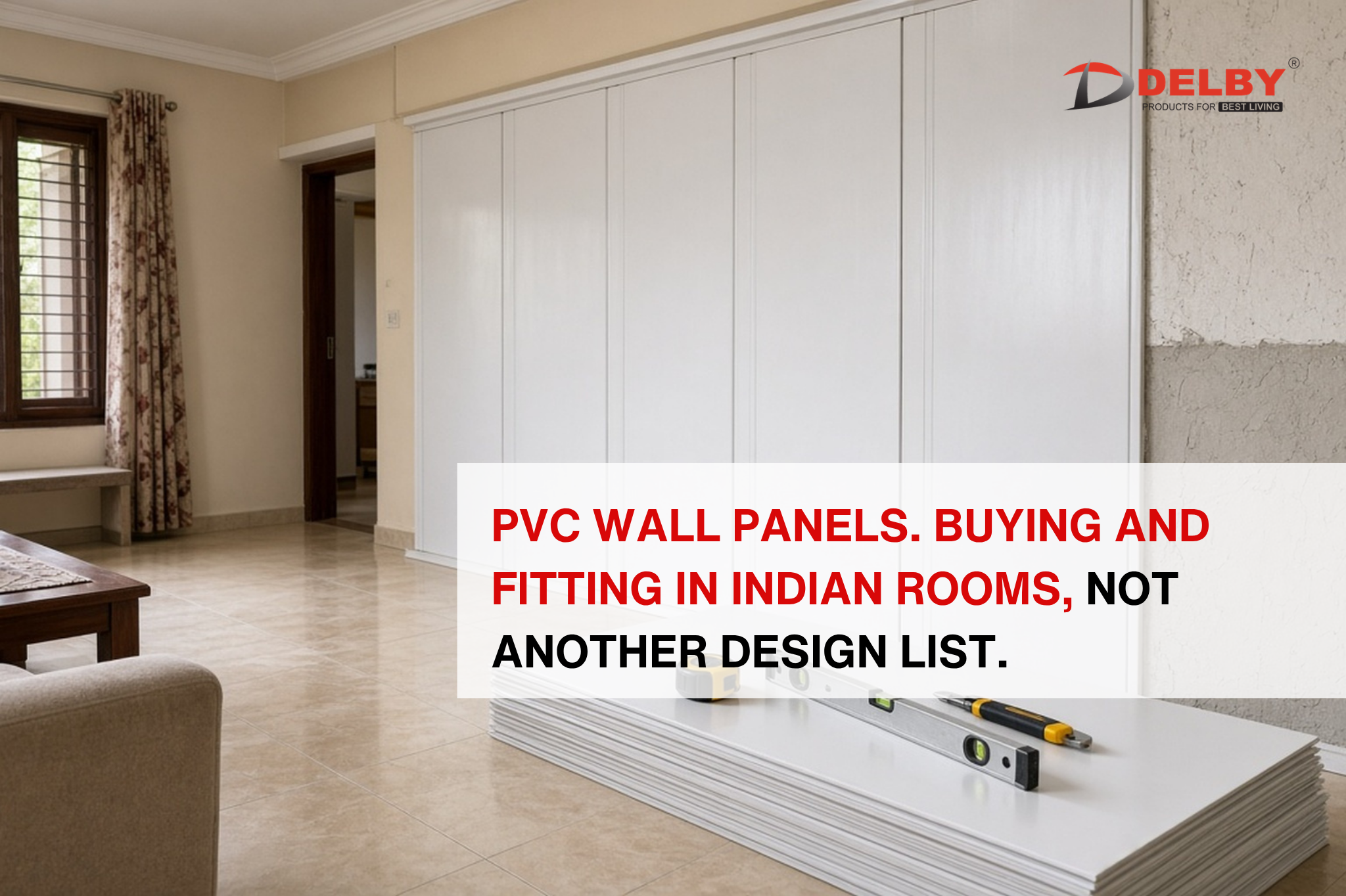
PVC Wall Panels for Indian Homes: How to Choose the Right Panel and Avoid Installation Problems
Most homeowners who search for PVC wall panels aren’t simply looking for decorative ideas; they usually have a problem wall that paint has failed to solve. Whether it is flaking paint behind a bedroom wardrobe, cracking tiles near a pooja room, or persistent dampness after the monsoon, traditional finishes can require constant maintenance. PVC wall panels offer an effective, long-lasting solution, provided the sheet quality, joining profiles, and target wall condition are chosen correctly.
Since establishing manufacturing operations in Ludhiana in 2012, Delby has supplied PVC wall and ceiling panels to dealers across India. Experience shows that most product complaints do not stem from the panel’s surface print or design, but from improper specification or installation—such as choosing an overly thin sheet for an uneven wall, using adhesive alone without joining profiles, or fitting panels directly over untreated wet plaster. This guide addresses those key challenges and explains how to select and install PVC panels for optimal longevity.
Understanding PVC Wall Panels
A PVC wall panel is a rigid, lightweight sheet engineered to provide a durable interior finish without the time, expense, and mess of traditional plastering, putty, and painting. Within Delby’s product lineup, interior PVC panels belong to the dedicated wall and ceiling collection. They differ distinctly from WPC exterior louvers, charcoal slats, or outdoor cladding products, each of which serves specific structural and aesthetic requirements.
Interior PVC sheets are lightweight and easy to transport, making them an ideal solution for inhabited apartments or homes where breaking down existing tiles or re-plastering walls would cause significant disruption. While PVC panels effectively cover uneven or visually damaged surfaces, they do not resolve underlying plumbing leaks or active water seepage. Any water leak behind the plaster must be repaired before installation begins.
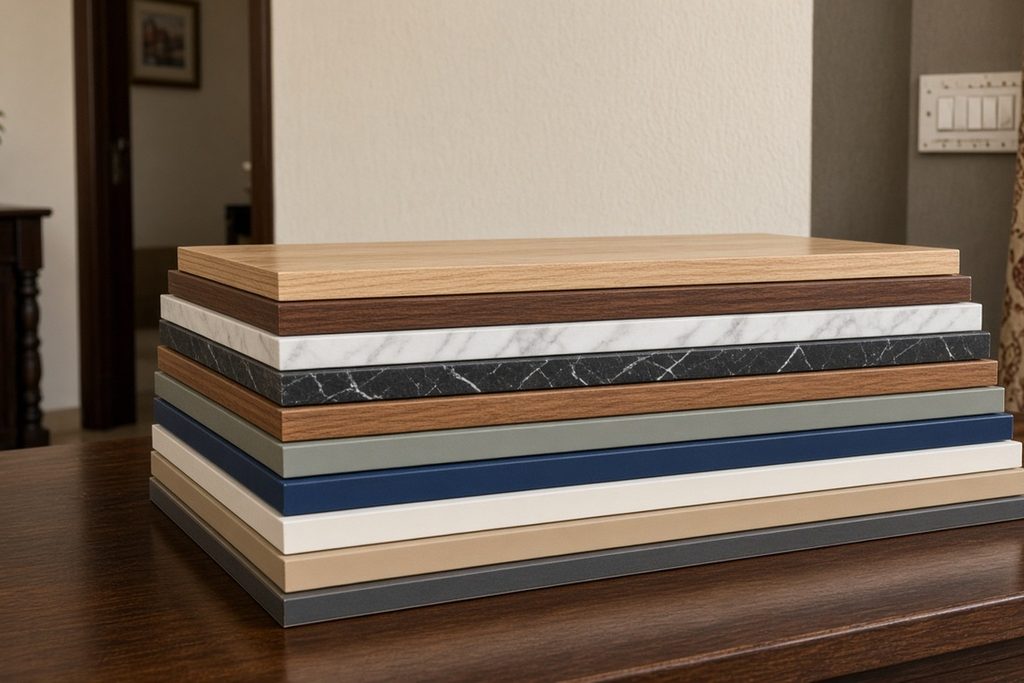
Popular Applications in Indian Homes
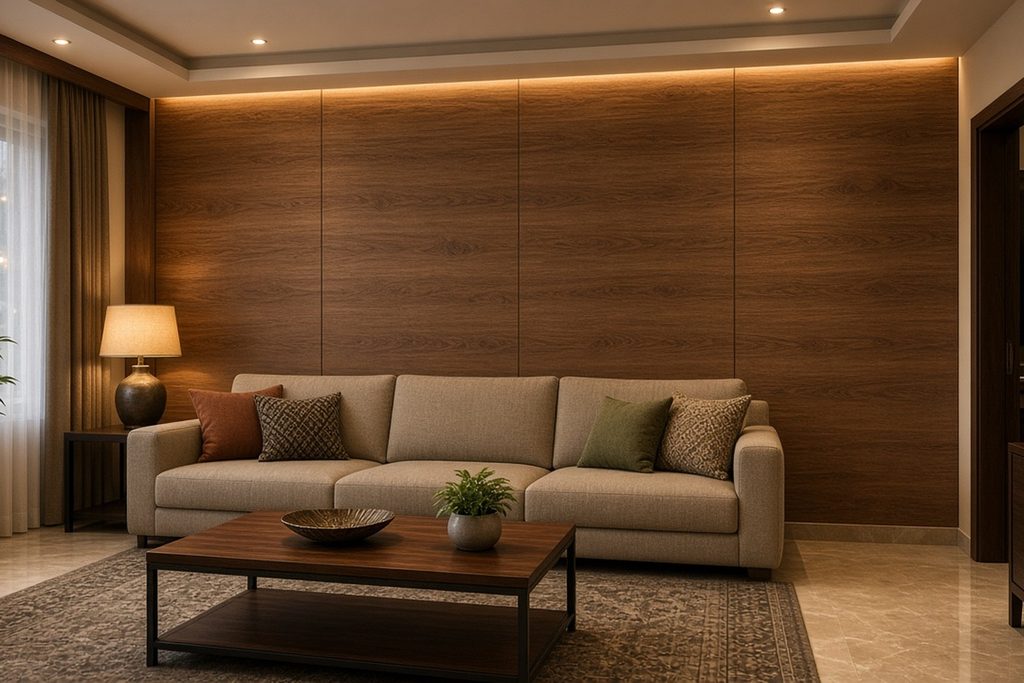
In residential spaces, PVC wall panels are commonly used for accent walls, such as behind the television in the living room, as bedhead backdrops in bedrooms, and along high-traffic hallway corridors. In commercial environments, such as offices and healthcare clinics, panels are frequently selected for reception walls and waiting areas due to their ease of cleaning and impact resistance.
When planning an installation, specific room conditions must be considered:
- Kitchens: Closed kitchens subjected to continuous steam and cooking moisture require moisture-rated panels with proper edge sealing.
- Bathrooms: PVC panels can be safely used on accent walls away from direct water streams. However, inside shower enclosures or wet areas, ceramic tiles or dedicated waterproof wet-area boards remain the recommended option.
Critical Factors: Panel Thickness, Joints, and Substrate Preparation
Choosing the right panel involves evaluating three foundational aspects rather than focusing solely on design patterns:
- 1. Thickness and Rigidity: Standard decorative sheets work well on level plaster walls. For uneven or aged brick walls, heavier and stiffer panels should be specified, or a frame/batten support system should be installed first.
- 2. Joining Profiles: Panels expand and contract with temperature changes. Relying solely on adhesive at panel edges can lead to open seams during peak summer heat. Using dedicated H-section joining profiles or tongue-and-groove interlocking designs ensures tight, lasting joints.
- 3. Wall Moisture Content: Because PVC is non-porous, moisture trapped behind a panel cannot evaporate. In ground-floor rooms or coastal regions following the monsoon, ensure the wall has thoroughly dried before installation to prevent adhesive degradation.
Environmental and Finish Considerations
Room environments influence how panel finishes perform over time:
- Matte vs. Glossy Finishes: High-gloss panels amplify reflections and show smudges easily in air-conditioned or dining areas. Matte finishes and soft woodgrain textures conceal dust and fingerprints more effectively, making them ideal for family living spaces.
- Sunlight Exposure: Interior PVC sheets are not intended for direct UV exposure. On west-facing interior walls receiving direct sunlight through windows, window film should be used to protect prints from premature fading. Exterior-grade boards should be chosen for balconies or outdoor-exposed areas.
Best Practices for Specification and Fitting
To ensure a smooth installation process, dealers and fitters should verify the following prior to work:
- Material Matching: Inspect panel bundles upon delivery to confirm matching shade batches across all sheets. Lay patterned or veined panels on the floor to align the grain design before applying adhesive.
- Complete Profile Kits: Source matching edge trims, corner profiles, and end caps together with the primary sheets. Using mismatched third-party profiles can compromise seam alignment and overall visual quality.
- Care After Installation: Clean panels with a soft, damp cloth and mild detergent. Avoid abrasive pads, thinners, or harsh acids. Maintain a safe distance between PVC panels and direct heat sources such as stoves or oil lamps.
Frequently Asked Questions
Can PVC wall panels be applied over existing wall tiles?
Yes, provided the underlying tiles are structurally sound and secured. Suitable tile-grade adhesives or batten frameworks should be used. Hollow or loose tiles should be removed before mounting panels.
Are PVC wall panels fireproof?
PVC panels are decorative wall coverings, not fire barriers. They should be kept away from open flames, cooktops, and high-temperature appliances. Ceramic tiles remain the ideal choice for kitchen cooktop splashbacks.
How do PVC wall panels compare to paint in overall longevity?
On walls prone to frequent wear or minor dampness, PVC panels offer superior long-term performance and lower maintenance compared to annual repainting. For dry, newly plastered walls where a uniform flat color is preferred, traditional paint remains a practical option.
How long do properly installed PVC panels last?
When installed on dry walls using genuine joining profiles and correct interior-grade sheets, PVC wall panels provide a durable finish that lasts for many years without cracking, peeling, or fading.
Choose the PVC Wall Panels With the Full Installation in View
Not only the decorative sheet influences the final appearance of the finished wall. The proper choice of the product, preparation of the wall surface, the right accessories and fixing materials, the correct installation of joints, and proper care are no less important.
Before buying, study the conditions of installation, solve the identified problems in the walls, and get to know the technical characteristics of the chosen product. Pay attention to the cost of installation, comparing the offers of different contractors, since the price of the sheet is not the only criterion.
Delby has a wide range of decorative panels for indoor and outdoor use in the form of tiles, sheets, and profiles. By visiting the Delby PVC Panels catalog, you can familiarize yourself with the varieties and select the material according to the project and the conditions of your walls. Moreover, a representative from the selected dealer will help you choose panels that best suit your walls and budget.
