



Your cart is currently empty!
Exterior Wall Panels: Types, Materials, Cost & Installation Guide

Objective
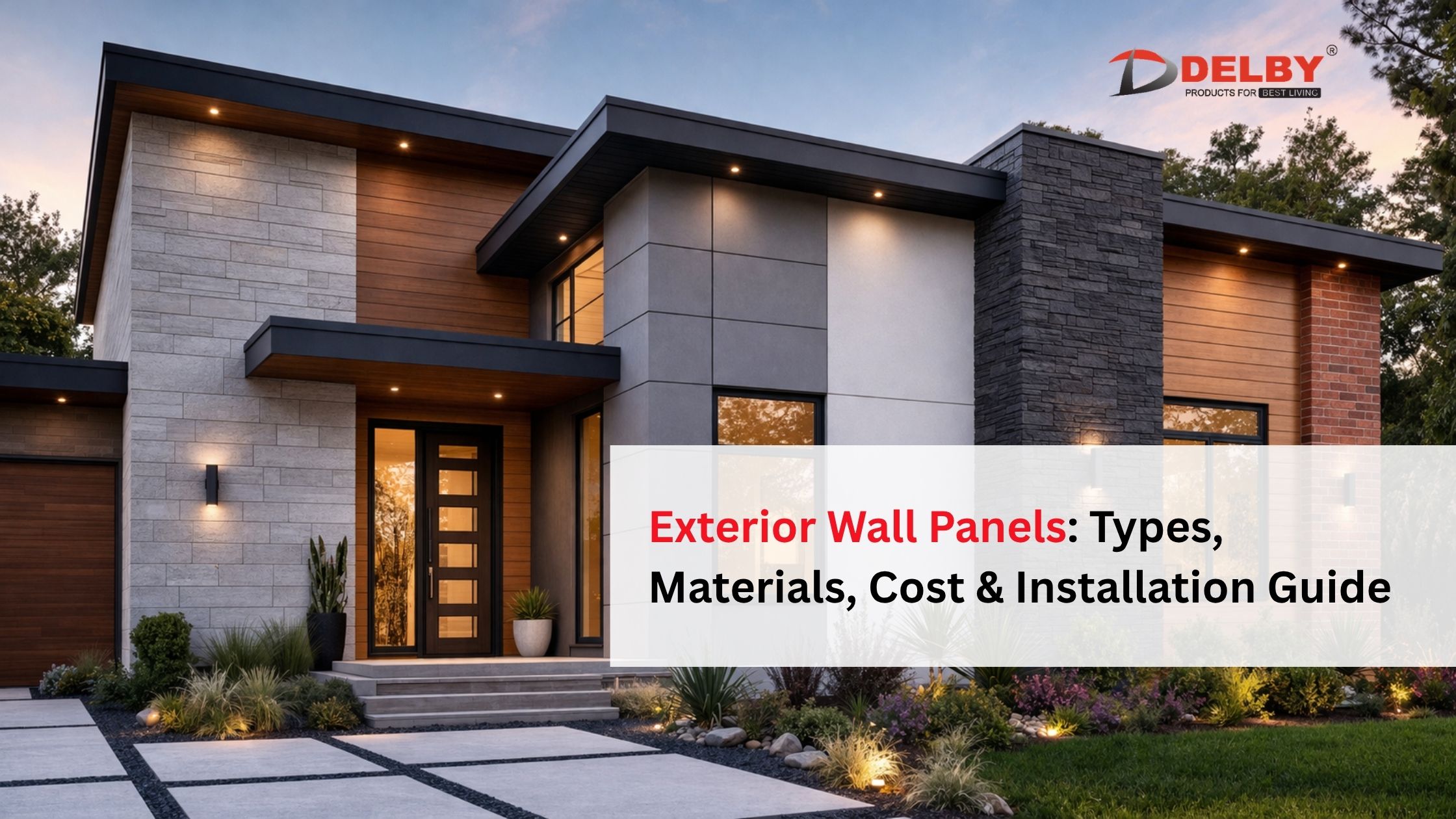
This guide explains what exterior wall panels are, the types available, the materials commonly used, factors that affect cost, and how installation usually works. The aim is to help you understand the subject clearly before choosing a panel system for a house, shop, office, or other building.
Key Takeaways
- Exterior wall cladding panels enhance a building’s exterior appearance and provide an additional layer of surface protection.
- The right panel depends on weather, budget, building style, and maintenance needs.
- Some outdoor wall panels are chosen for looks, while others are chosen more for durability and easier upkeep.
- Good installation matters just as much as the panel material.
- Weatherproof wall panels only perform well when the base wall and fixing method are handled properly.
Table Of Contents
- What Exterior Wall Panels Actually Are
- Why People Choose Outdoor Wall Panels
- Common Types Of Exterior Wall Cladding Panels
- Materials Used In Facade Wall Panels
- How To Choose The Right Exterior Wall Cladding Design
- What Affects The Cost Of Exterior Decorative Panels
- What Installation Usually Involves
- Common Mistakes People Make
- Final Thoughts
- FAQs
What Exterior Wall Panels Actually Are
Exterior wall panels are panels installed on the exterior of a building. They cover the outer wall and create a finished exterior layer. Some are plain and simple. Some are textured. Some are made to stand out as a design feature.
People often confuse them with mere decorative coverings, but that is only part of the picture. A well-chosen panel system can also help the wall deal with sun, dust, rain, and day-to-day outdoor exposure.
That does not mean every panel works the same way. Some are more about style. Some are more about practical use. Some do both fairly well.
At Delby PVC, this kind of product is usually looked at from both sides. It should improve the building’s look, yes, but it should also be practical enough for real outdoor use.
Why People Choose Outdoor Wall Panels
Most people do not start searching for outdoor wall panels for no reason. Usually, there is a clear problem they are trying to solve.
Sometimes the building looks old and tired. Sometimes the paint keeps fading. Sometimes the outer wall has started to look patchy, stained, or uneven. In other cases, the owner wants a cleaner and more modern finish.
Here are some of the common reasons people use exterior panels:
- To improve the look of the building
- To create a more modern front elevation
- To reduce the need for frequent repainting
- To cover minor surface flaws
- To give the building a more finished and intentional look
Panels can make a big visual difference. A flat, dull wall can suddenly look sharper and more complete. That is one reason exterior decorative panels have become popular in both homes and commercial spaces.
Still, it is important to be realistic. Panels are not a shortcut for fixing serious wall damage. If the wall has moisture issues, cracks, or a weak surface beneath it, those problems should be addressed first.
Common Types Of Exterior Wall Cladding Panels
When people first start looking into exterior wall cladding panels, they often assume all of them are more or less the same. They are not.
The category is broad. Some panels are basic and functional. Others are made to create a certain design style.
Flat Panels
Flat panels are simple and clean. They work well on modern buildings and on projects aiming for a neat, sharp look with minimal visual detail.
Textured Panels
These have a surface pattern or finish that adds depth to the wall. Some copy wood grain. Some have grooves. Some are made to look more natural or more architectural.
Exterior Decorative Panels
These are chosen mainly for style. Exterior decorative panels are often used on front facades, entrance walls, feature sections, and places where the owner wants the exterior to stand out a little more.
Interlocking Panels
Some panel systems are designed to fit together. This can help with alignment and give the final wall a cleaner look if installed properly.
Weather-Focused Panels
Some weatherproof wall panels are designed with outdoor performance as their primary focus. These are often used in places where rain, heat, and moisture are bigger concerns than appearance alone.
Materials Used In Facade Wall Panels
Material matters a lot. It affects how the panel looks, how long it lasts, how much it weighs, and how much care it will need later.
Here are the most common options.
PVC Panels
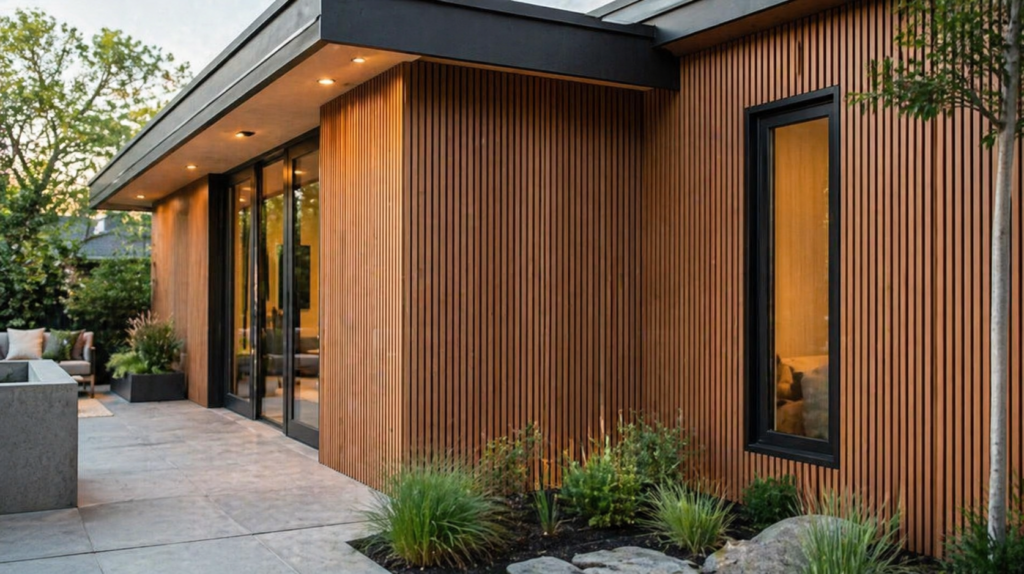
PVC is a popular choice because it is lightweight, clean-looking, and easier to maintain than many traditional exterior finishes. It can work well in projects where people want a tidy finish without too much ongoing upkeep.
PVC is often chosen because it offers:
- Low maintenance
- Easy cleaning
- Good moisture resistance
- Lighter handling during installation
This is naturally one reason Delby PVC comes up in these discussions.
Composite Panels
Composite panels combine materials to create a balance of appearance and strength. They are often chosen when the owner wants a more premium exterior feel with decent durability.
Metal Panels
Metal facade wall panels are common in modern commercial buildings, but they are also used in some homes. They look sharp and contemporary. Finish quality matters a lot, especially in harsh outdoor conditions.
Fiber Cement Panels
These are heavier and usually feel more solid. They are often chosen for their durability and can be finished to resemble wood or other materials.
Wood And Wood-Look Panels
Wood has a warm, natural look that many people like. The problem is maintenance. Real wood outside usually requires more care over time. Wood-look alternatives may offer a similar appearance with less work.
Here is a simple comparison:
| Material | What People Like About It | What They Should Think About |
| PVC | Easy to maintain, lighter, neat finish | Not every design style suits it |
| Composite | Good balance of appearance and durability | Usually costs more |
| Metal | Modern look, strong surface | Heat and finish quality matter |
| Fiber Cement | Solid feel, durable | Heavier and harder to handle |
| Wood | Natural look and texture | More maintenance over time |
How To Choose The Right Exterior Wall Cladding Design
This is the part where many people go wrong. They choose what looks attractive in a sample and forget to ask whether it suits the full building.
A good exterior wall cladding design should match the structure, not fight with it.
A few things to think about:
- Is the building modern, traditional, or a mix of styles?
- Do you want the exterior to look subtle or bold?
- Will the panel cover the whole wall or only part of it?
- How much dust, rain, and heat does the wall face?
- How much upkeep are you willing to deal with later?
Color matters. Texture matters. Panel width matters. Even joint lines matter.
For example, outdoor decorative wall panels can look excellent on a feature wall, but if you use an overly busy design across a large area, the whole building can start to feel heavy or cluttered.
This is also why looking at only one small catalog image is not enough. You need to imagine the full elevation. You need to think about how the wall will look from the road, in daylight, after rain, and after a year of dust and weather.
In practical conversations, this is often where Delby PVC decisions become clearer. The better choice is usually not the loudest one. It is the one that still looks right after the excitement of installation is gone.
What Affects The Cost Of Exterior Decorative Panels
People often ask, “What is the rate?” That is understandable, but it is not the full question. The real cost depends on several things together.
The main cost factors include:
- Material type
- Thickness of panel
- Surface finish
- Brand or product quality
- Total wall area
- Building height
- Labor charges
- Need for support framing
- Edge trims and accessories
- Base wall repair or preparation
A cheaper material may save money at the start, but it may not always save money in the long run. If the finish fades quickly, if the fixing system is poor, or if repairs start early, that cheaper option stops being cheap.
When comparing quotes, try to understand what is actually included.
Ask whether the price covers:
- Material only
- Material plus installation
- Support frame
- Corner trims
- Joint finishing
- Surface preparation
- Sealants and accessories
That gives you a more honest idea of the total project.
What Installation Usually Involves
Installation quality matters just as much as the panel itself. Good material installed badly will still give you problems.
A normal installation process usually goes like this.
1. Wall Inspection
The existing wall is checked first. Loose plaster, damp patches, weak areas, and visible cracks should be dealt with before anything goes on top.
2. Measuring And Planning
The wall is measured carefully. A layout is planned so that panel joints, cuts, and edges look balanced rather than random.
3. Base Preparation Or Framing
Some facade wall panels need a support frame. Some work on a prepared wall surface, depending on the system being used. This step is important because the panel needs a stable and properly aligned base.
4. Panel Cutting And Fixing
Panels are cut according to the plan and installed using the recommended method. Alignment matters here. So does spacing.
5. Joint And Edge Finishing
Corners, edges, and joints are finished properly. This affects both appearance and performance. Poor edge work can make the whole job look weak.
6. Final Check
Once installed, the wall should be checked for straight lines, secure fixing, clean joints, and overall finish quality.
This is especially important with weatherproof wall panels. They only do their job properly if the entire system is installed correctly.
Common Mistakes People Make
Many exterior panel problems stem from simple mistakes, not complicated ones.
Some of the most common are:
- Choosing only by price
- Ignoring the condition of the existing wall
- Using a design that is too busy for the building
- Hiring installers without proper experience
- Skipping proper sealing and edge finishing
- Choosing the wrong material for the climate
- Forgetting to ask about long-term maintenance
Another common mistake is assuming every outside wall needs the same treatment. It does not. A front feature wall and a side wall exposed to harsh rain may need different thinking.
Planning to Upgrade Your Exterior with Modern Wall Panels?
Choosing the right exterior wall cladding panels can improve both the look and durability of your building. Delby PVC Panels offers weather-resistant, low-maintenance, and modern outdoor panel solutions designed for long-lasting performance. Get expert advice to select the best exterior wall panel design for your project.
Final Thoughts
Choosing exterior wall cladding panels is not only a design decision. It is also a practical one. The right panel should suit the building, fit the climate, make sense for the budget, and stay manageable over time.
Whether you are looking at basic outdoor wall panels, feature-focused exterior decorative panels, or more modern facade wall panels, it helps to slow down and properly assess the whole job. Material, finish, wall condition, labor, and installation method all matter together.
At Delby PVC and across the broader market for exterior finishes, the smartest choices are usually those that balance appearance with common sense. A good wall panel should still be a good decision long after the work is finished.
FAQs
1. What Are Exterior Wall Cladding Panels Used For?
They are used to cover the exterior walls of a building, enhance its appearance, and provide an additional layer of protection against outdoor elements.
2. Are Outdoor Wall Panels Better Than Paint?
In many cases, yes. Paint can work well, but outdoor wall panels often offer a more finished look and may reduce the need for repeated maintenance over time.
3. Which Material Is Best For Weatherproof Wall Panels?
There is no one answer for every building. PVC, composite, metal, and fiber cement can all work well. The best choice depends on weather, wall condition, and budget.
4. Do Facade Wall Panels Need A Support Frame?
Some do, and some do not. It depends on the panel system and the condition of the wall underneath. A site check is the best way to confirm it.
5. How Do I Choose The Right Exterior Wall Cladding Design?
Start with the building style, the size of the wall, weather exposure, your budget, and how much maintenance you want later. A good exterior wall cladding design should suit the entire building, not just a single sample piece.
6. Are Exterior Decorative Panels Costly To Install?
They can cost more than basic finishes, especially if the design is detailed or the installation needs extra support work. The total cost depends on material, labor, wall size, and finishing details.
