



Your cart is currently empty!
Exterior Cladding Panels vs ACP & Stone Cladding: Which Is Right for Your Building in 2026?

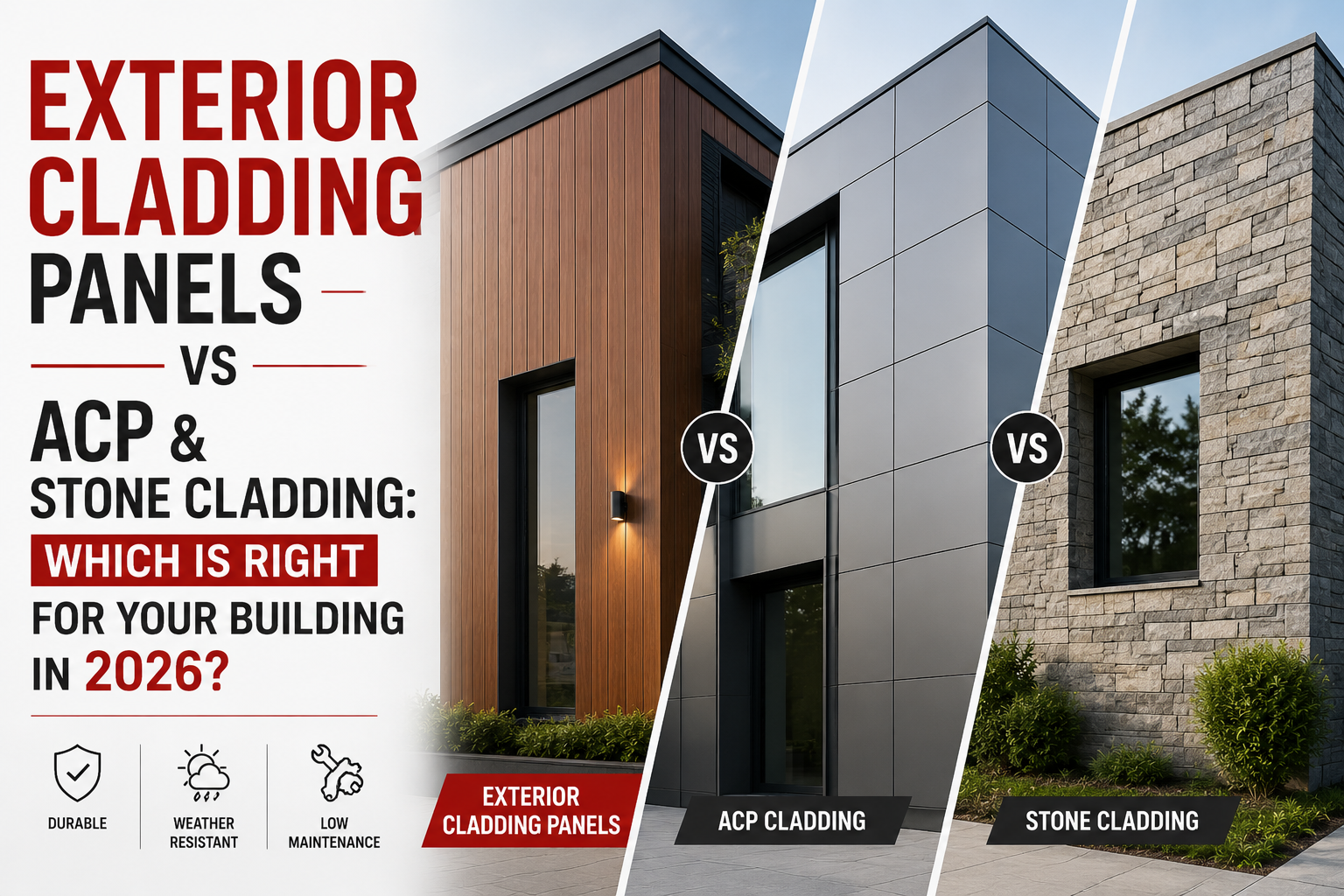
Choosing an exterior facade is one of the most critical structural and architectural decisions you will make for your property. Unlike interior wall paints or furnishings that can be easily refreshed every weekend, exterior cladding panels are built to stay on a building for 10, 15, or even 25 years.
A building’s facade is its first line of defense against the elements—bearing the brunt of scorching summer heatwaves, heavy monsoon storms, airborne pollutants, and temperature swings. Pick the wrong material, and you could face regular scaffolding costs, water seepage into interior walls, or structural fading within just a few years.
Today, three major materials dominate modern architectural discussions: PVC Exterior Cladding Panels, Aluminium Composite Panels (ACP), and Natural/Engineered Stone Cladding.
Here is an honest, detailed engineering and cost comparison of all three options to help you determine which material fits your budget, design goals, and long-term maintenance expectations.
1. What Is PVC Exterior Cladding?
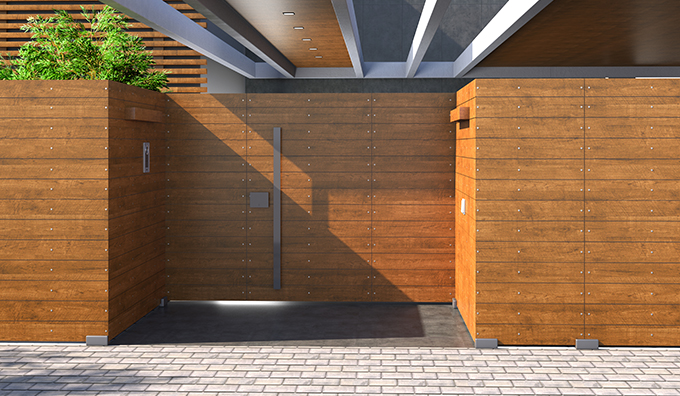
Exterior cladding pvc panels are heavy-duty, extrusion-moulded panels manufactured from high-density, exterior-grade Polyvinyl Chloride resin blended with UV stabilizers, impact modifiers, and fire retardants.
Unlike indoor PVC sheets, exterior-grade PVC panels are specifically formulated to withstand relentless sun exposure, heavy rain, and seasonal temperature fluctuations without warping, fading, or becoming brittle.
Key Characteristics
- 100% Waterproof: Completely non-porous; moisture, rain, and damp air cannot penetrate the core.
- Lightweight Modular Build: Installs over a lightweight sub-frame without adding dead load to the building foundation.
- Realistic Surface Textures: High-definition finishes emulate natural hardwood, fluted wood profiles, granite, or slate textures without the organic weaknesses of real wood or stone.
- Low Maintenance: Requires no periodic sealing, polishing, or repainting—only an occasional wash down with a garden hose.
2. What Is ACP (Aluminium Composite Panel) Cladding?
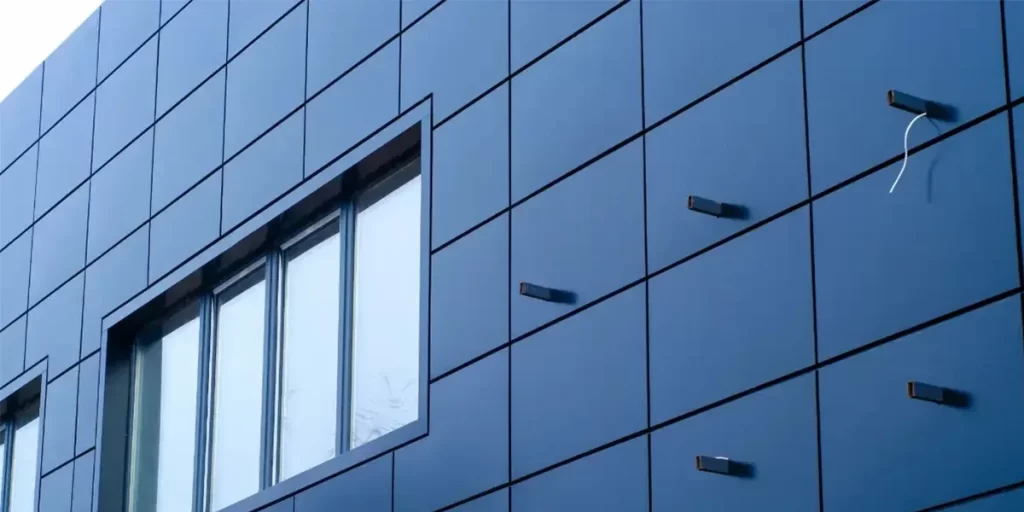
ACP cladding is a flat panel composed of two thin outer sheets of coated coil aluminium (typically 0.25 mm to 0.5 mm thick) permanently bonded to an inner thermoplastic polyethylene (PE) core or a mineral-filled fire-retardant (FR) core.
ACP became the de facto standard for commercial high-rises, showrooms, and retail facades throughout the early 2000s due to its flat, futuristic look and metallic finishes.
Key Characteristics
- Sleek, Monolithic Aesthetic: Delivers a flat, smooth, ultra-modern corporate appearance.
- Good Strength-to-Weight Ratio: Stronger than pure plastic panels while lighter than solid sheet metal.
- Fabrication-Heavy: Panels must be routed, folded into “trays,” and riveted onto custom aluminium runner grids.
- Edge & Sealant Vulnerabilities: If the raw, cut edges of the aluminium sheet are exposed to standing water or coastal salt air, galvanic oxidation and delamination can occur over time. Furthermore, the silicone sealant between joints usually dries out and stains the facade over a 5 to 7 year cycle.
3. What Is Stone Cladding?
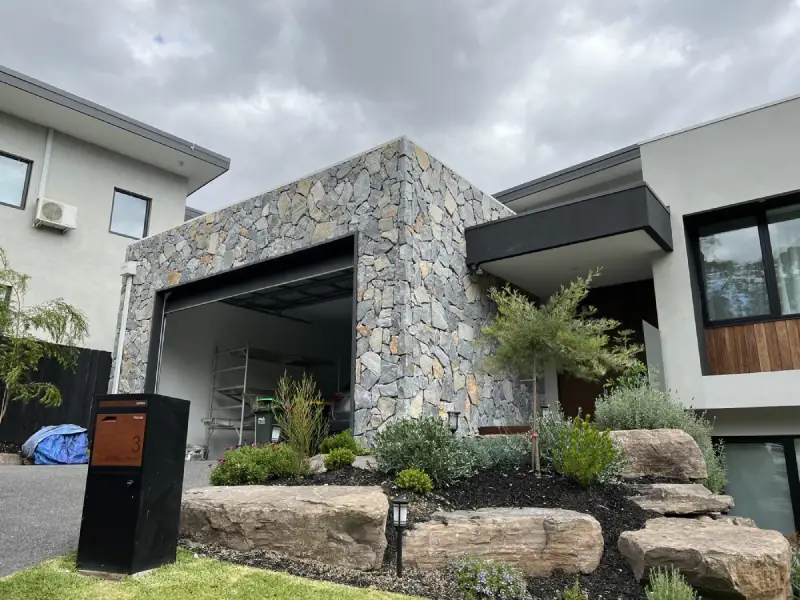
Stone cladding involves fixing thin slices of natural stone (such as granite, sandstone, slate, travertine, or limestone) or manufactured cementitious stone veneer to exterior structural masonry.
It is the oldest, most traditional method of giving a building an authentic, monolithic, and earthy character.
Key Characteristics
- Timeless & Luxurious: Natural grain variations provide an organic, unmatched architectural presence.
- Heavy Structural Mass: Weighs between 40 kg to over 90 kg per square meter, requiring structural evaluation and heavy-duty stainless steel anchors.
- Porous by Nature: Most natural stones absorb water, making them susceptible to efflorescence (white salt leaching), moss growth, and damp patches if hydrophobic sealers are not reapplied every few seasons.
- Labor-Intensive Installation: Wet-mortar or mechanical dry-cladding systems demand highly skilled stone masons and slow, methodical construction schedules.
Detailed Comparison: PVC vs. ACP vs. Stone Cladding
To evaluate which material best fits your upcoming residential, commercial, or institutional project, review how they compare across fundamental architectural parameters:
| Performance Factor | PVC Exterior Cladding Panels | ACP (Aluminium Composite) | Natural / Engineered Stone |
|---|---|---|---|
| Material Weight | Very Lightweight (~3–6 kg/sq.m) | Moderate (~5.5–8.5 kg/sq.m) | Very Heavy (40–90+ kg/sq.m) |
| Water & Moisture Resistance | 100% Waterproof (Zero absorption) | Good, but joint sealant can leak | Porous; needs regular sealing |
| Maintenance Demands | Minimal (Occasional rinse) | Low to Moderate (Sealant replacement) | High (Algae cleaning, resealing) |
| Corrosion / Rust Risk | Zero (Polymer-based) | Risk of edge corrosion/pitting | Zero (Subject to mineral leaching) |
| Aesthetic Versatility | Woodgrain, fluted, matte, stone-look | Metallic, gloss, solid corporate colors | Raw natural textures, earthy stone |
| Thermal Insulation | High (Low heat transmission) | Low (Conducts heat into masonry) | Moderate (High thermal mass) |
| Installation Speed | Fastest (Tongue-and-groove system) | Moderate (Requires routing/folding) | Slowest (Requires heavy anchoring) |
| Initial Material Cost | Budget to Mid-Range | Mid to Premium | High to Premium |
| Structural Upgrades Needed | None (Fits old/new structures) | Minimal | High (Needs load-bearing capacity) |
| 10-Year Total Cost of Ownership | Lowest | Moderate | High |
In-Depth Analysis Across 5 Practical Decision Factors
1. Durability and Weather Performance
- PVC Cladding: Performs reliably across humid coastal belts, heavy monsoon zones, and high-heat regions. Because it is non-metallic, it does not rust or corrode, and its UV-stabilized layer prevents surface chalking.
- ACP Cladding: Extremely durable on open facades, but coastal regions or pollution-heavy industrial zones can lead to bubbling or pitting along cut edges. Water entering failing joint silicone can also deteriorate the inner adhesive film over decades.
- Stone Cladding: Stone is virtually indestructible from an erosion standpoint, but seasonal freeze-thaw cycles or continuous monsoon soaking can crack mortar lines and cause spalling on softer stones like sandstone or slate.
2. Structural Load and Renovation Suitability
- PVC Panels: Because they add very little dead weight to the structure, PVC panels are ideal for renovating older buildings where hacking away existing plaster isn’t an option. They mount directly onto lightweight aluminum or galvanized iron (GI) battens.
- ACP Panels: Require a dedicated aluminum runner framework. While moderately light, they require precise structural alignment to prevent panel oil-canning (surface waviness).
- Stone Cladding: Requires reinforced concrete walls or specialized structural stainless-steel tieback systems. Installing stone on an older facade often requires an engineer’s assessment of structural capacity.
3. Installation Complexity and Labor Costs
- PVC Panels: Feature precision-engineered tongue-and-groove interlocking edges. Panels clip or screw directly onto battens, allowing standard carpentry crews to complete large facade areas quickly and cleanly.
- ACP Panels: Require specialized facade fabricators equipped with CNC routing tools, sheet benders, and certified scaffolding teams to fold trays and apply weatherproof structural silicone.
- Stone Cladding: Demands experienced stone masons. Heavy slabs must be cut with wet diamond saws, leveled with spacers, and anchored with mechanical brackets. It is the most time-consuming and labor-intensive method.
4. Thermal Comfort and Sound Dampening
- PVC Panels: Polymers are natural thermal insulators. When installed with an air gap behind the panel (a ventilated rainscreen), PVC cladding forms a thermal barrier that reduces indoor heat gain during peak summer months.
- ACP Panels: Aluminium conducts ambient heat rapidly. Without added mineral wool insulation behind the panels, an ACP facade transfers exterior heat directly toward interior walls.
- Stone Cladding: Features high thermal mass, which slows heat transfer during the day but continues to radiate stored heat into the building long into the evening.
5. Long-Term Maintenance and Upkeep
- PVC Panels: Cleaning requires nothing more than wiping with water or using a light pressure hose once or twice a year.
- ACP Panels: The silicone sealant between panel joints naturally collects dust, creating dirty black streak lines after rain that require professional high-rise facade cleaning.
- Stone Cladding: Requires ongoing maintenance. Porous stone absorbs dirt, moss, and vehicle soot, requiring periodic pressure washing, chemical stain removal, and reapplication of hydrophobic sealers every 3 to 5 years.
Which Cladding Material Should You Choose in 2026?
- Choose PVC Exterior Cladding Panels if: You want a durable, 100% waterproof, and exceptionally low-maintenance facade at a sensible budget. It is the most practical choice for modern homes, villas, residential developments, boutique offices, boundary walls, and fast-track renovation projects seeking the warmth of wood or stone without the weight and upkeep.
- Choose ACP Cladding if: You are constructing a commercial high-rise, automobile showroom, corporate headquarters, or petrol retail outlet where a sleek, metallic, industrial look is the primary architectural requirement and budget permits professional fabrication teams.
- Choose Stone Cladding if: You are building an ultra-luxury residence or heritage building where authentic, heavy natural stone is the non-negotiable design centerpiece, and you have both the budget and structural capacity to manage periodic sealing and maintenance.
Frequently Asked Questions
Is PVC exterior cladding as durable as ACP?
For most residential and commercial projects, outdoor-grade PVC cladding matches the real-world lifespan of ACP while eliminating the risk of edge oxidation, corrosion, and sealant deterioration in high-moisture or coastal regions.
Which is cheaper: PVC cladding or stone cladding?
PVC exterior cladding is significantly more affordable than natural stone cladding. It cuts material acquisition expenses by up to 40–60% and slashes installation costs because it avoids heavy structural steel brackets, wet mortar, and specialized stone masonry crews.
Can PVC cladding replicate a stone or wood look authentically?
Yes. Modern co-extrusion technology creates deep textures, realistic matte sheens, and tactile grain lines that closely match natural timber, fluted panels, and split-face stone—without the risk of rotting, warping, or insect damage.
Will PVC exterior panels expand and contract in summer and winter?
Like all architectural polymers, PVC undergoes minor thermal movement across wide temperature swings. Quality exterior systems address this with slotted mounting holes and interlocking expansion channels, allowing the panels to expand and contract smoothly without buckling or cracking.
Can PVC cladding panels be installed over an existing tiled or plastered wall?
Yes. One of the strongest advantages of PVC cladding is its ability to mount over an existing wall using a lightweight aluminum or GI sub-frame, bypassing the dust, expense, and downtime of hacking away old plaster or tile.
Not Sure Which Cladding Option Fits Your Project?
Every building comes with its own structural requirements, local environmental challenges, and budgetary parameters.
Whether you are designing a contemporary private residence or updating a commercial facade, our team can help you evaluate panel dimensions, wind-load ratings, and profile textures.
Get in touch with the Delby team today to discuss your project specifications, view physical texture samples, or receive a tailored cost estimate for your building!
