



Your cart is currently empty!
Benefits of Bamboo Charcoal Panels: Why They’re Replacing Wood and Laminate in 2026

Choosing the right wall panelling material affects everything from your interior’s look to how much time and money you’ll spend maintaining it years down the line. Here’s why more homeowners, architects, and interior designers across India are switching to bamboo charcoal panels.
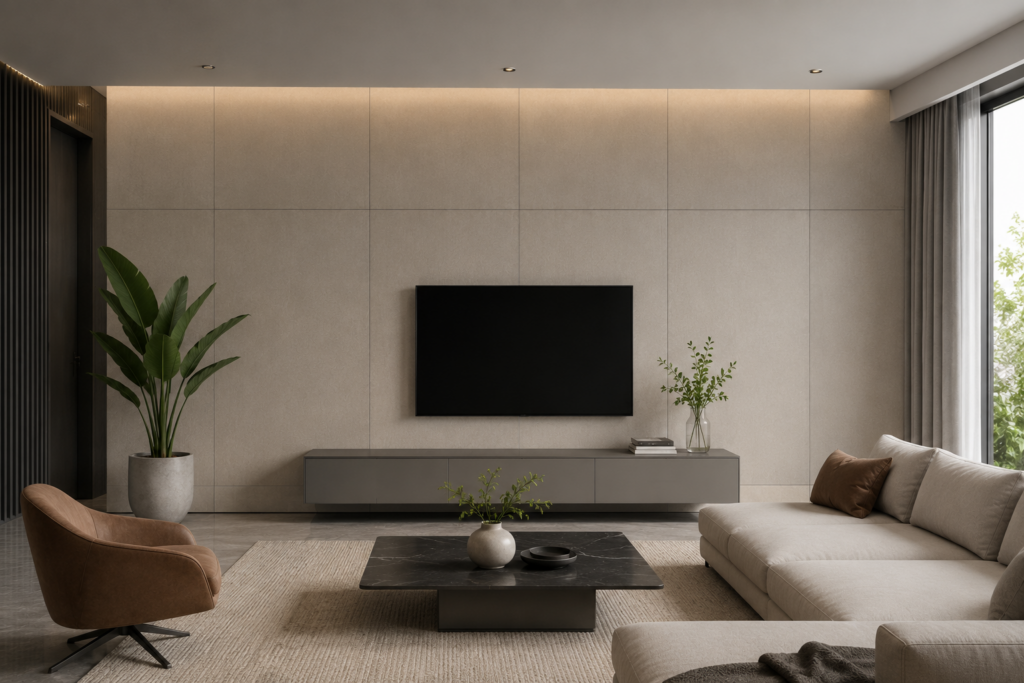
Top Benefits of Bamboo Charcoal Panels
1. Waterproof and Humidity Resistant
Every Delby bamboo charcoal panel is built to be 100% waterproof, so it won’t swell, warp, or degrade even in bathrooms, kitchens, laundry rooms, or humid coastal climates.
2. Termite and Pest Resistant
The bamboo fibre core has natural anti-mite properties, and the PVC lamination adds another layer of protection, so there’s no risk of the termite damage that plagues solid wood panelling.
3. Fire Retardant
A flame-retardant additive is built into the manufacturing process, adding a meaningful safety margin for homes, offices, and commercial interiors.
4. Low Maintenance
Unlike wood, which needs periodic polishing and sealing, bamboo charcoal wood veneer panels only need an occasional wipe-down to stay looking new.
5. More Affordable Than Solid Wood
Bamboo charcoal panels deliver a similar premium look to solid wood at a fraction of the upfront cost, and with far lower maintenance spend over the years.
6. Wide Design Variety
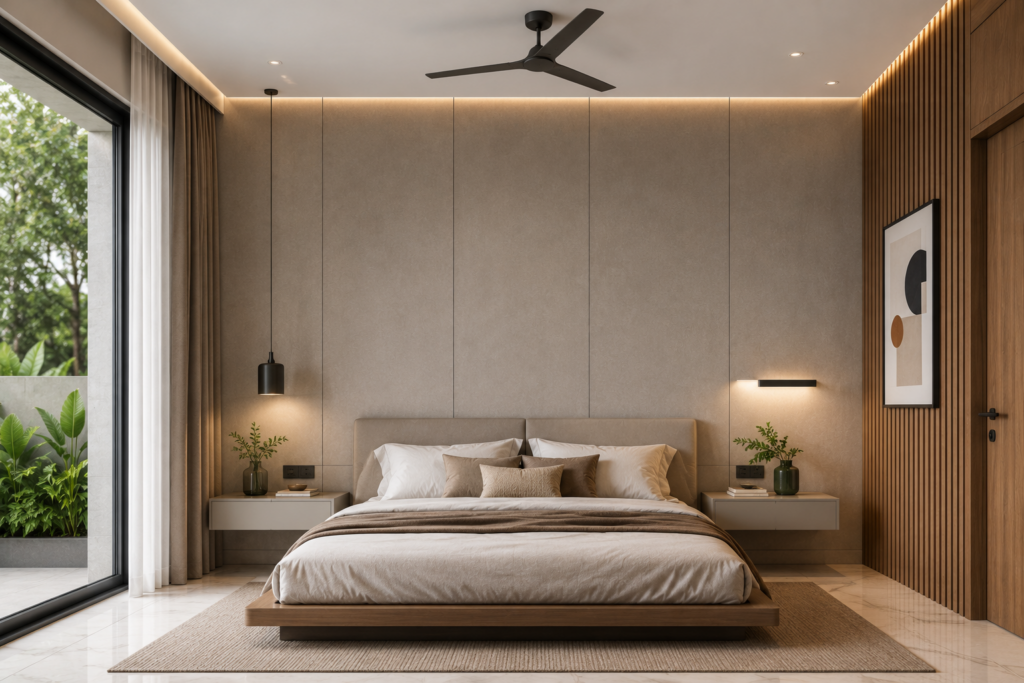
With finishes spanning Wood, Stone, Fabric, Metallic, and more, WPC bamboo charcoal wall panels give designers far more flexibility than a typical laminate panel range.
Bamboo Charcoal vs Laminate Panels — What’s the Difference?
Laminate panels are typically a thin decorative layer bonded onto a particleboard, MDF, or plywood core. Bamboo charcoal panels use a bamboo-fibre and PVC-resin core instead, which changes their performance significantly:
| Factor | Bamboo Charcoal Panels vs Laminate Panels |
| Core material | Bamboo fibre + PVC resin vs particleboard/MDF/plywood |
| Water resistance | 100% waterproof vs core can swell if edges are exposed to moisture |
| Termite resistance | Naturally resistant vs wood-based core remains vulnerable |
| Weight | Lightweight, easier handling vs heavier depending on core |
| Long-term durability | Holds shape and colour for years vs can delaminate over time |
Which One Should You Choose?
If your space sees regular moisture exposure, like a bathroom, kitchen, or a home in a humid region, bamboo charcoal panels are generally the safer long-term choice. For dry, low-moisture interiors on a tighter budget, standard laminate panels can still work, but many designers now default to bamboo charcoal wood veneer panels simply for the peace of mind and reduced maintenance.
Frequently Asked Questions
Is bamboo charcoal panel better than laminate?
For moisture-prone or termite-prone environments, bamboo charcoal panels generally outperform standard laminate panels because their core is waterproof and pest-resistant, not just the surface layer.
Do bamboo charcoal panels fade over time?
Quality PVC-laminated bamboo charcoal panels, like Delby’s ASSA and ORRO ranges, are designed to resist fading and hold their colour for years with normal use.
Are bamboo charcoal panels eco-friendly?
Bamboo is a fast-growing, renewable resource, which makes bamboo charcoal panels a more sustainable choice compared to panelling sourced from slow-growing hardwoods.
Want to feel the difference for yourself? Request a free bamboo charcoal panel sample from Delby and compare it against your current wall finish.
