



Your cart is currently empty!
Bamboo Charcoal Panels: Where They Are Worth It.

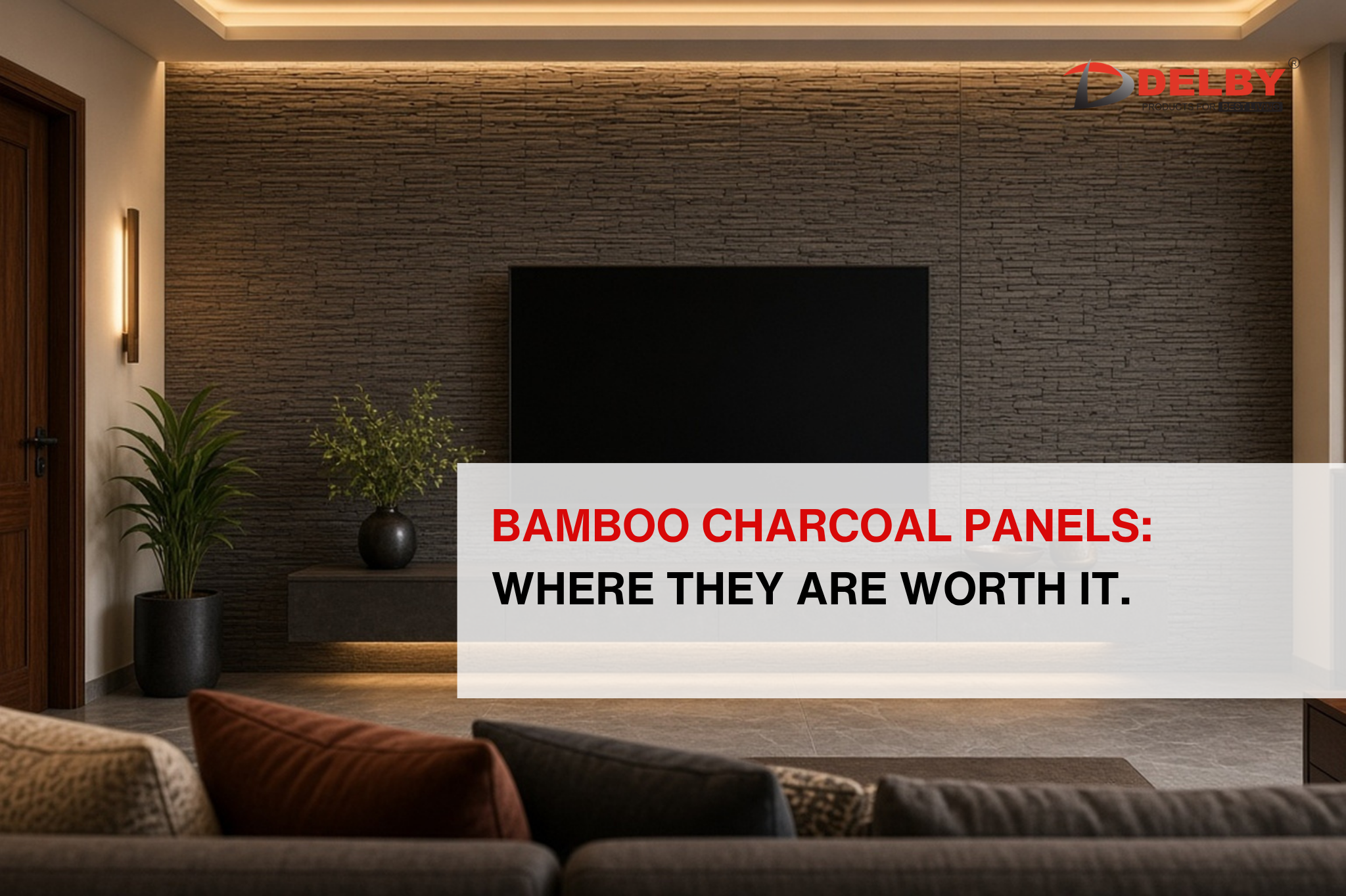
A printed wood sheet plus a bamboo charcoal panel come orders as if they were one product in two prices. They are not. The printed sheet is a picture of grain over a smooth face. Bamboo charcoal is the wall people touch and then look at again. If the wall is the one guests see from the door, the difference shows. If the wall is a passage nobody stands in, the printed sheet is often the honest order.
Delby has carried bamboo charcoal panels for dealers who were tired of selling only a flat print. The site already has a note on what the material is, and an older price band. This page is the question that comes after that. Which room is worth it, and which room is you paying for a face nobody will stand in front of? The panel is an interior board. The face is built around bamboo charcoal, so it reads as a fibre, not as a sticker.
Families pick it after a year of paint that marked, or after a laminate that peeled in a ground-floor room. It is not a pipe repair. If the plaster is damp, the panel will sit on that damp and the room will smell. Dry the wall. Then open the bundle. Start with the living room wall you see before you see the sofa. That is the wall a bamboo charcoal panel earns.
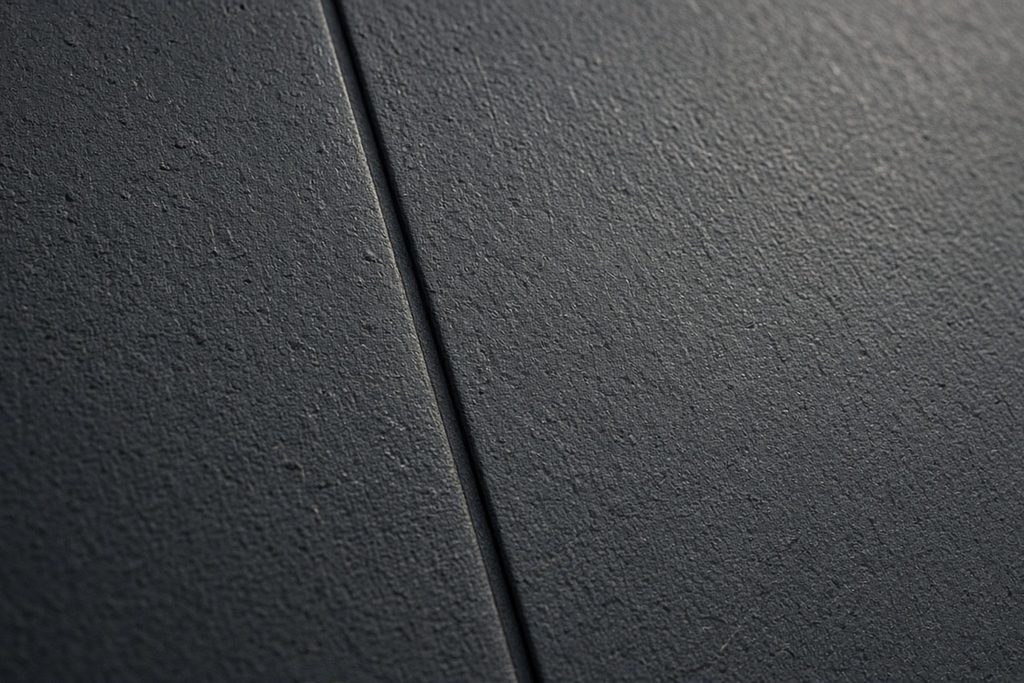
Side light from a window shows the face. A downlighter in a shop does not. Hold the sample on that wall at the time the family actually sits there, which in most homes is after six. A sample that looked warm at noon can go dull at dusk. If it still looks right at dusk, order it.
The bedroom wall behind the bed is the second yes. People wake up to it. A flat print there looks like a headboard sticker after a month. The fibre face does not. Keep the panel off the side where the reading lamp sits too close. Heat marks a board. A lamp needs a little air, the same as it would against wood.
A cabin is the third yes. Not the open workstation, where bags hit the wall. The room the client sits in with a guest. Bamboo charcoal there feels quieter than paint and less like an office catalogue than a glossy sheet.
Wipe it. Do not scrub it. A damp cloth and a drop of soap is the care. Thinner and the bathroom acid used on tiles will cloud it.
Where it is the wrong spend: A closed passage. A store. The wall behind a filing cabinet. A clinic corridor that gets a trolley twice an hour. Those walls want a plain PVC sheet that wipes in one pass and costs less to replace if a corner chips. Putting bamboo charcoal there is how a dealer wins the sample meeting and loses the margin conversation later.
Kitchen, with a limit: A dry kitchen wall away from the hob can take it. The wall behind the flame cannot. Same rule as any panel. A tawa left against it, or a diya too close at Diwali, will mark the face. Say that before the festival, not after.
Bathroom, with a harder limit: A feature wall outside the shower line is a conversation. Inside the spray is a no. Water running down a joint every morning is not what this board is for. Tile still wins there.
Balcony and the stair open to the sky are a no. That is exterior work. Eclad and Saphhex are the outdoor families. A bamboo charcoal panel on a west-facing balcony will be asked to do a job it was not sold for, and the colour will be blamed in May.
Monsoon is the test people actually care about. In a ground-floor flat the wall sweats. In a coastal town the air is wet even when the paint looks fine. Bamboo charcoal handles a humid room better than a paper face that lifts. It does not handle a leak. The usual leak is outside: a crack in the external plaster, a choked outlet on the balcony above. Fix that. Then panel. Dealers who skip this step get the call in October, and the panel is innocent.
Fitting is ordinary and still where jobs fail. The wall needs to be straight enough that the fibre is not waving. A thin board on a bad plaster shows every hump. Level the worst of it, or batten it. The join needs a real profile, not a bead of glue and a hope. Summer heat in a top-floor room will open a glue-only seam. Match the edge cap to the face. A white cap on a warm fibre looks like the trim was bought later from another shop.
Batch shade matters more on this face than on a plain sheet, because the fibre shows a mismatch. Open one bundle before the fitter starts. Lay two boards side by side in daylight. If the tone jumps, stop. Do not discover it after the adhesive is on.
Do not let the name slide. A dark printed PVC sheet is not bamboo charcoal. Clients say charcoal and mean black. The carpenter hears one product and orders the other. The return happens when the client touches the wall. If they want the fibre, open this range. If they want a black TV wall at a sheet price, sell a PVC panel and call it that. Mixing the names is how this category gets a bad month.
Fluted is a different look again. Fluted is a groove. Bamboo charcoal is a face. A room can take one feature wall of each. It should not take both on the same wall. The eye does not know where to rest. If the client is stuck, put both samples on the wall and stand at the door. The one you see first is the one to order.
Price moves with the city and the thickness. Do not quote a blog from last year. Ask the dealer for the current sheet rate and the fitting rate as two lines. A low sheet with no profile and no levelling is not a saving. The category page is the right place to shortlist a code before that call.
Care after it is up is short. Dust it. Wipe marks. Skip scouring pads. Keep heat off it. If a child draws on it in pencil, a damp cloth usually lifts it. Marker is a different story. On a child’s room, a plain sheet on the lower half and bamboo charcoal above the reach line is a sensible split.
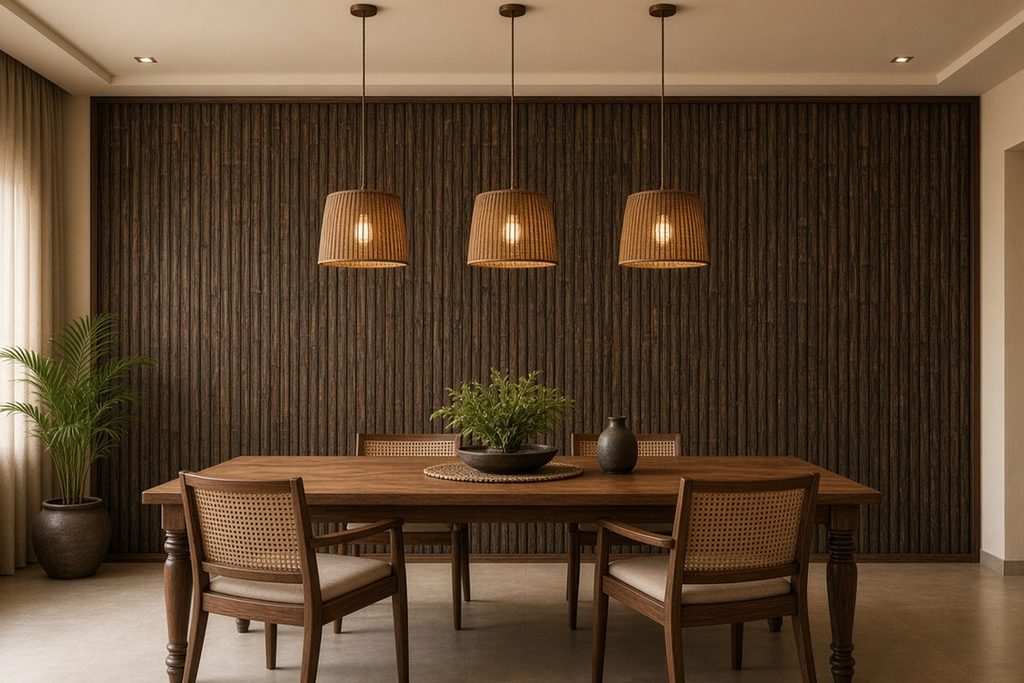
For the dealer, the useful question is not which design is new. It is who stands in front of this wall. If the answer is guests, the couple, or a client in a cabin, bamboo charcoal panels are the order. If the answer is nobody, sell the PVC sheet and keep the relationship. The site already ranks for the material. This page is so the right wall gets it.
Frequently Asked Questions
Where can I apply bamboo panels?
On the wall visible from the front door, on the wall behind the bed, and one in the cabin where the client sits. These are the only walls where the fiber face justifies the cost. A closed passage or the wall behind a wardrobe is a waste.
Is a black printed sheet the same as bamboo charcoal?
A printed sheet is a picture of the grain or just a blackened surface. Bamboo charcoal is a fiber face. Specify the range if the client wants fiber, or ask for a PVC sheet and a printed TV wall if they want the look of charcoal at sheet price.
Can you put bamboo panels in the kitchen or a bathroom?
A kitchen wall away from the hob is acceptable, but not over the flame. A bathroom feature wall away from the shower is a conversation piece, but not in the spray zone.
Will the monsoon affect the panels?
They will be fine in a damp room, but not a leaking one. If the wall is wet, dry it and ensure any cracks or blocked outlets are repaired.
Can you put them up on a balcony?
No, the balcony and the open staircase are external structures. An Eclad or Saphhex board is for the outside, not an interior bamboo charcoal panel.
How do I clean the panels?
Remove loose dirt, then wipe with a damp cloth and a little soap. Do not use a scouring pad, thinner, or tile acid. Keep the hot tawa and diya away from the face.
