



Your cart is currently empty!
Fluted Wall Panels for a TV Wall: Choosing Flute Width, Layout and Finish

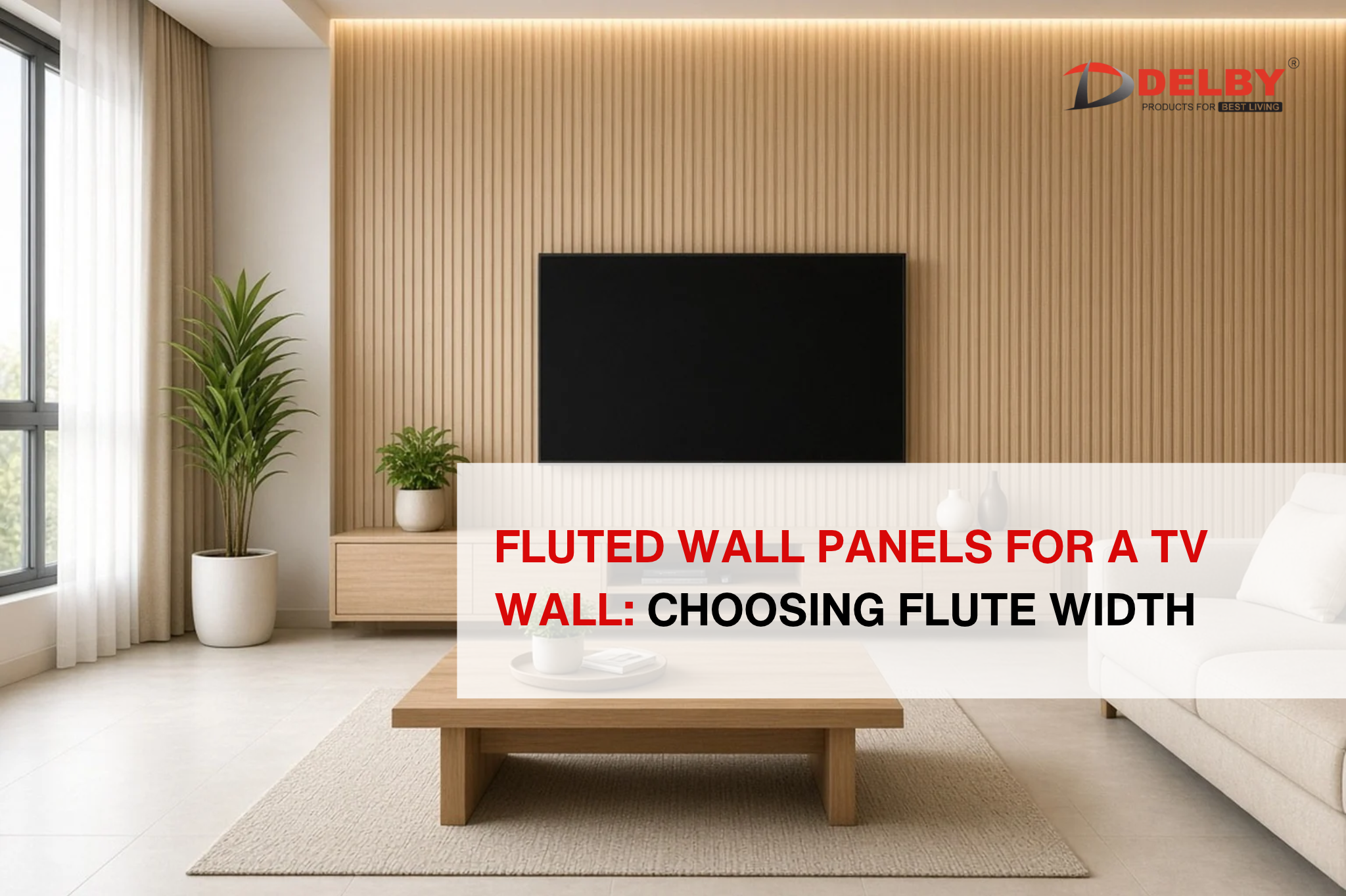
Start with the wall
A TV wall is nearly always what people notice first in a modern living room. When used behind a screen, fluted wall panels add depth and texture without cluttering the view. The repeating vertical lines pull the eye upward, help hide surface imperfections, and create a focal point that feels finished even when the TV is off.
Getting a TV wall right comes down to three choices: the flute width, the layout around the TV and wiring, and the finish. Here is a practical look at how to weigh those options so the finished wall feels balanced.
Selecting the flute width
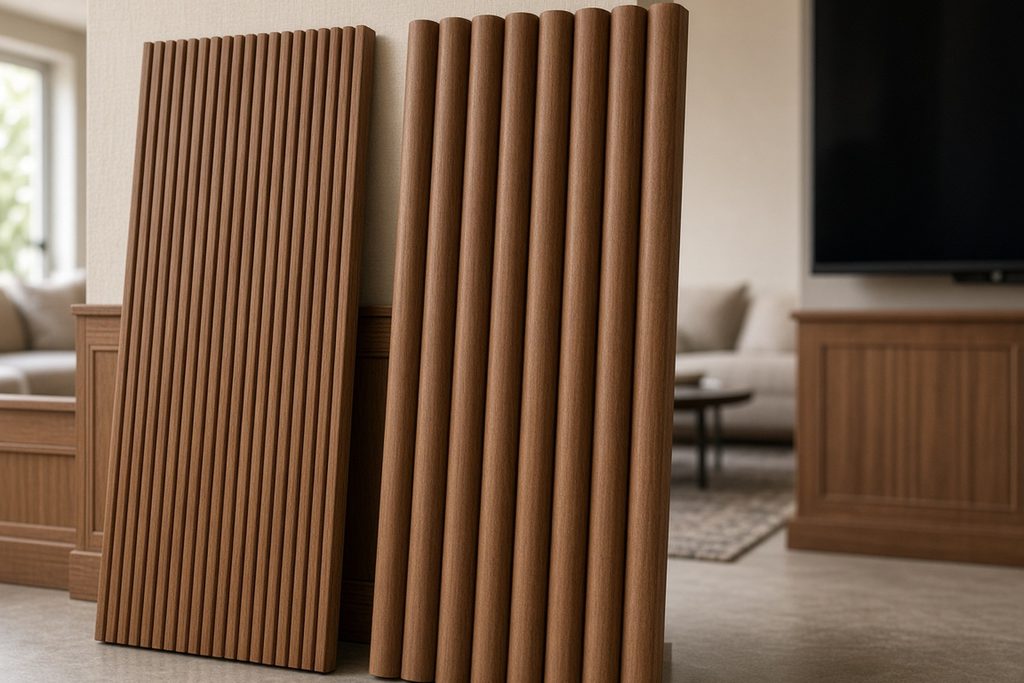
Flute width sets the scale of the pattern. Narrower flutes feel busier and more textured, while wider flutes read as bold architectural channels.
- Fine or Narrow Flutes: Best for smaller rooms or full-wall installations where you want a subtle, refined texture that does not overpower the space.
- Medium Flutes: The most versatile option for standard living rooms. They offer enough definition to catch light and shadow clearly from a distance.
- Wide Flutes: Ideal for large spaces, double-height ceilings, or partial-wall feature zones where a strong visual statement is needed.
Planning the layout around the TV
A common approach is running panels edge-to-edge across the main wall. Another popular option is creating a central feature panel slightly wider than the TV or media console, leaving plain painted wall on either side.
Before mounting panels, plan cable routing, power outlets, and wall brackets. Running wires behind the paneling or utilizing backer strips keeps the installation seamless and cable-free.
Selecting the finish
The finish determines how the wall interacts with lighting in the room:
- Wood Grains & Earthy Tones: Bring warmth and balance to modern tech setups, softening the black rectangle of the TV screen.
- Matte Solid Colors: Offer a crisp, contemporary look that complements minimalist interiors.
- Metallic or Accent Finishes: Add a touch of luxury when highlighted with subtle LED strip lighting along the top or bottom edge.
Lighting the flutes
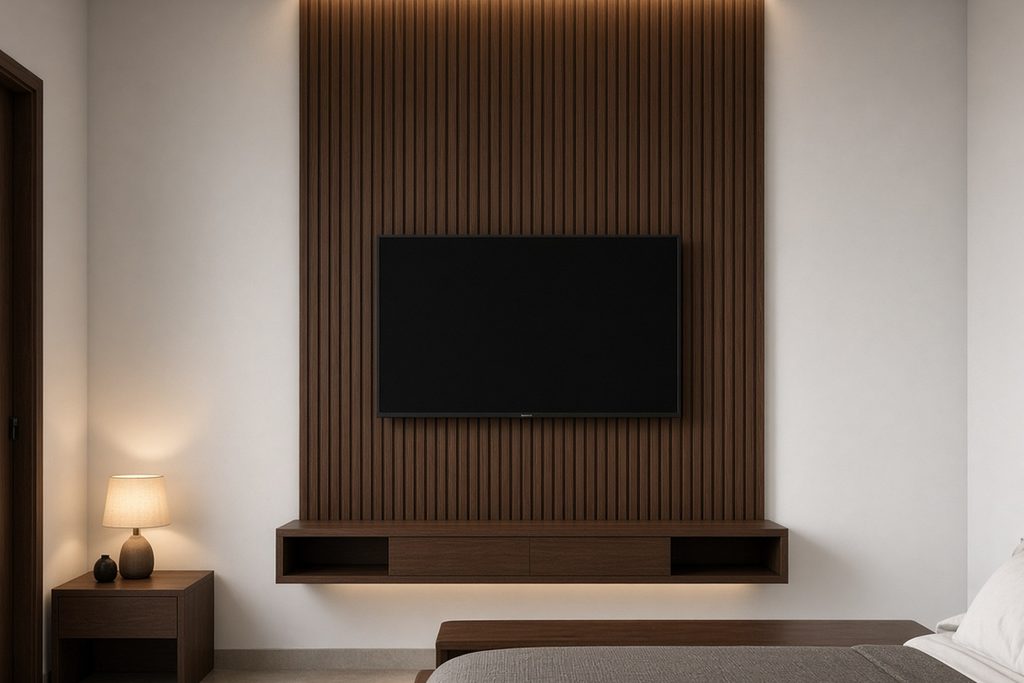
Lighting transforms fluted panels by casting highlights and shadows across the ridges. Concealed LED strip lighting placed at the top ceiling junction, bottom baseboard, or along side borders casts a gentle wash down the channels, adding depth and ambient atmosphere during evening viewing.
Mistakes to avoid
- Ignoring Socket Placements: Failing to align switch plates and outlets with the flute pattern before installation leads to awkward cutouts.
- Over-scaling in Small Rooms: Choosing overly wide flutes in compact rooms can make the space feel cramped.
- Forgetting Cable Access: Mounting panels without a dedicated conduit or pass-through for screen cabling forces visible wires onto the finished wall.
TV wall planning checklist
- Measure the wall height and total width of the TV unit.
- Determine whether to cover the full wall or create a accent feature panel.
- Select flute width (narrow, medium, or wide) based on room proportions.
- Mark mounting bracket, power outlet, and cable conduit positions.
- Choose finish (wood grain, matte color, or metallic accent) that matches room decor.
- Plan LED accent lighting channels and power drivers if applicable.
- Test sample panels in local room light before final installation.
See the profiles before you decide
To find the perfect match for your interior, explore the ECO Fluted Panels range or order a fluted panels sample kit to evaluate textures and colors directly in your room lighting. You can also download catalogues for detailed profile specifications.
Frequently asked questions
Which flute width is best for a small living room?
More Readily spaced narrow flutes give the appearance of a soft texture at close range, making them preferable for small rooms. Make test samples from your sofa and see for yourself.
Should fluted panels cover the whole TV wall?
Not always. A single band along the back of the TV is fine for a small room while full-wall panelling is better for larger rooms. They can both look good with the right planning.
Can I mount a TV on a fluted panel wall?
Yes, but the bracket must be securely anchored into the wall behind. Arrange the support and wiring with your installer before the panels are installed.
Would a gloss coating produce reflective effects on the TV?
It can if there are a few windows and lamps. For a TV wall, a matte finish is generally safer – test samples in the light of your room.
How can I conceal TV wires on a fluted wall?
TV point to the console should be planned before installation, and sockets where the TV and devices will sit.
