



Your cart is currently empty!
Fluted Panels or a Plain PVC Sheet – What’s Best for your Wall?

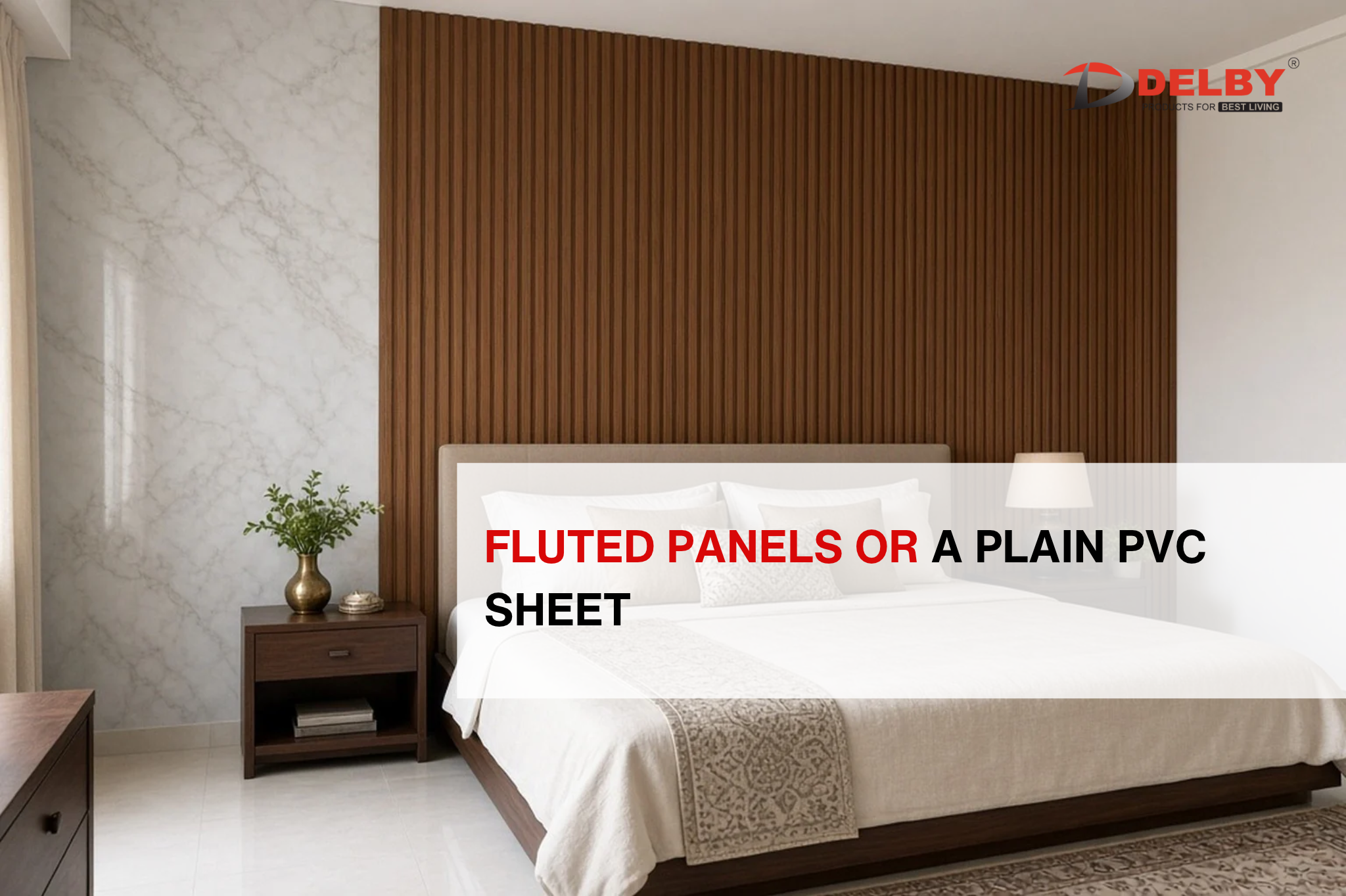
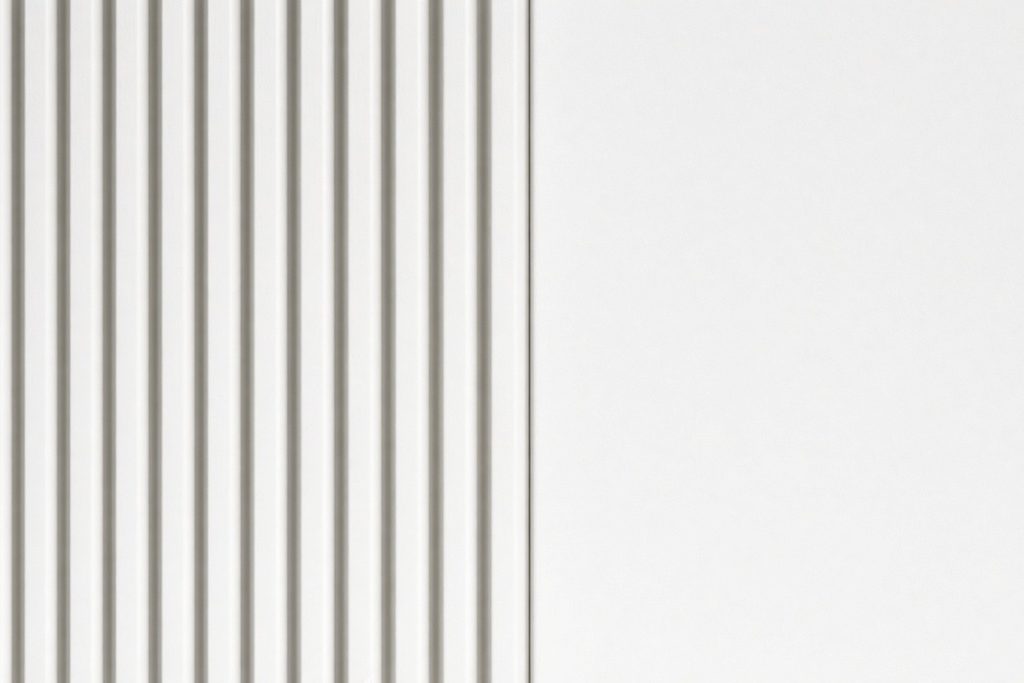
The grooved boards provide lines and shadows on a wall. When lit from a side light, the grooves create texture and can elongate a wall. A plain PVC sheet offers a smoother finish that is generally easier to clean without grooves where dust can settle.
Showroom displays typically feature fluted panels as their texture looks good in a photograph, but the most suitable option for your home is dictated by the wall location, light exposure, maintenance, and your personal use patterns. The best approach is to select the panel based on the wall and its purpose, not by what is displayed in the showroom.
Where to Use Fluted Panels
Fluted panels can be used on entrance walls, bedroom feature walls, decorative sections beside a TV unit, and selected walls in offices or clinics. They create the illusion of depth via their grooves – and are a good choice for feature walls or where a smooth surface feels too bare.
The grooves also create shadows that pick out light sources. Walls exposed to side lighting can be good candidates for fluted panels – such as an entrance wall or a relatively narrow decorative section beside a TV unit. This doesn’t mean the whole room should follow the same pattern.
- Bedrooms: A fluted panel could be used behind or beside the bed (depending on the layout).
- Office Cabins: This can create a better backdrop for the desk.
The key is to consider the relationship between the panel and the furniture and how people interact with the space. Consider using a fluted panel where the texture adds value. A single feature wall or section can create contrast versus using fluted panels throughout.
Where to Skip the Flute and Use a Plain PVC Sheet
In a busy passage or where bags, chairs, etc., can create additional dust and interaction with the wall, the grooves on a fluted panel may demand extra cleaning. A plain PVC sheet is a more practical option for walls that need frequent wiping. This might apply to selected sections of a clinic, reception, or a high-traffic corridor.
When specifying the panel for such an area, you would want to consider both the appearance and the maintenance needs of the wall. A smooth surface is likely to be more practical for the staff or family who will be interacting with the surface on a daily basis.
This doesn’t mean the fluted panel should not be used in more practical spaces, but it does demand a greater understanding of the increased cleaning demands.
The TV Wall Dilemma
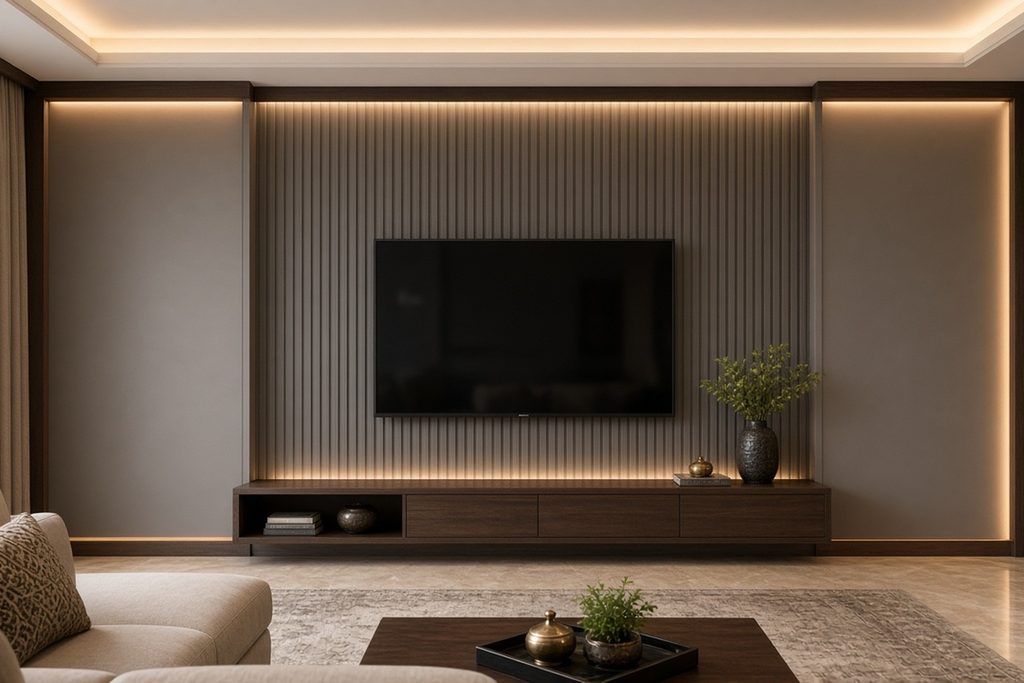
A TV wall needs more planning than a feature or accent wall as it has to accommodate the TV bracket, cabling, sockets, and other fittings. Installing a TV directly over a deeply grooved surface can demand more attention to the bracket fixing method, depending on the panel design. The bracket should be fixed appropriately and the panel should not be relied on as a substitute for suitable support.
A plain PVC sheet or another suitable smooth-finish panel can offer a better background for the TV. Fluted panels can then be used in a side section or adjoining wall in order to introduce texture without overcomplicating the TV area. This can be a good option when a homeowner desires the hotel-style feature wall but wants a more practical TV area.
Space and Colour Considerations
In a narrow corridor or compact space, the deeply grooved flutes can provide more illusion of depth and projection. Depending on the panel, this can also create a busier appearance. A plain panel doesn’t offer the same grooves and projection. If a room has one feature wall and several smaller sections, you might consider the fluted design on the feature wall and plain panels elsewhere.
The colour of the panel finish can also dictate the maintenance and appearance:
- White and Very Light: Can brighten the space, but dust and marks may be more apparent, depending on the finish and light exposure.
- Mid-tone Wood Finishes & Soft Greys: Can offer a practical option for everyday use.
- Black and Other Dark Finishes: Can provide a strong visual statement, but pale dust may be more apparent against the finish.
Someone who desires a dark wall but has practical cleaning requirements would find the plain sheet in a dark finish to be worth consideration over a deeply grooved black panel. The final decision should balance the light exposure, surroundings, and maintenance needs of the room.
Installation, Trims, and Substrates
A great panel design can be undermined by the edge, corner detail, and joints. Matching trims and suitable finishing profiles can help to create cleaner transitions between fluted and plain panels. When the two designs are used together, ask the installer how the joints will be finished and whether the selected profile is suitable for both panel types.
Edges that appear untidy at handover can be difficult to rectify if the finishing details weren’t agreed in advance.
Prior to Fitting the Panels:
- Lay out the corner and joint detail without adhesive to check the alignment.
- Confirm that the wall is suitably dry, sound, and prepared, as per the product instructions.
- Check how the panels will meet at corners, edges, and adjoining surfaces.
- Agree on the position of trims and caps before installation commences.
Plan sockets, cabling, and any other fittings prior to fitting the panels.
The same applies to the substrate behind the panel. PVC panels should not be used as a covering for unresolved dampness or a wall that requires repair.
Material Variations and Fitting Direction
Prior to panel selection, clarify what is most important – surface finish, maintenance, material construction, or suitability for a specific area. Fluted panels and plain sheets offer different finishes and the construction of the products can vary between ranges.
Avoid assuming that one product is inherently more durable and compare the specifications, intended applications, and fitting instructions of the actual products being considered.
Viewing samples of the available options together is a useful way to ensure a good decision is made. View them against the intended wall and alongside the room’s flooring, furniture, and lighting. A finish that looks good on a small sample in the showroom can look very different across an entire wall.
Should Fluted Panels Be Vertically or Horizontally Fitted?
- Vertical Fluting: Can assist to draw the eye upwards and lengthen a wall, hence its appeal in flats and rooms where the ceiling height is limited.
- Horizontal Fluting: Offers a contrasting effect and lengthens the wall horizontally. On a long corridor, it can help to introduce a more linear appearance – the outcome will depend on the panel design and the rest of the room.
Neither orientation is inherently better. Prior to installation, agree on the orientation and lay out the sample panels in that direction. This is especially important where adhesive or a specific joining system makes changes after installation complex.
Lighting, Maintenance, and Pricing
Lighting can have a big impact on the appearance of fluted panels. Side lighting will accentuate the grooves and texture of the panel, but it can also highlight uneven areas of the plasterboard or misalignment in the panels. If the existing plaster is not suitable for side lighting, discuss the wall preparation and lighting plan with your installer.
A plain sheet will offer a less pronounced visual effect, but it should not be seen as a substitute for a wall that is unsuitable for side lighting.
How to Clean Fluted Panels
Use a soft brush to remove dust from the grooves, followed by a damp cloth, if the product instructions allow. Avoid scouring pads and abrasive cleaners, which can modify or damage the surface finish over time.
In a kitchen, plain sheets may be more convenient on suitable walls away from direct heat and the cooking area, due to the reduced number of grooves where residue can accumulate. Suitability around cooking areas will depend on the specified product’s heat limits and installation instructions.
Compare the Complete Installation Cost
When requesting pricing, ask for the rates for fluted panels and plain PVC sheets at the same time. Compare the same area, finish, and scope of work, so the difference is meaningful. The panel price does not indicate the final installed cost.
Ask whether the quotation includes:
- The panels and selected finish.
- Matching trims, edge caps, and joining profiles.
- Wall preparation and selected fixing materials.
- Installation labour.
- Cutting, finishing, and wastage allowances.
Fluted panels may require different finishing details or installation from a plain sheet. The impact on the final cost depends on the product and the layout. An itemised quotation makes it easier to compare both options fairly.
Frequently Asked Questions
In which areas do fluted panels look best?
Fluted panels look best on entrance walls, bedroom feature walls, and decorative sections beside a TV unit. They are effective where light can compliment their texture and the grooves are complemented by the furniture and overall room design.
What should I use a plain PVC sheet for?
A plain PVC sheet should be considered for walls that need frequent wiping or where a simple, uncluttered finish is desired. These may include selected sections of corridors, reception areas, and other commonly used spaces.
Can fluted panels be installed behind a television?
Yes, if the selected panel and installation system is suitable. However, the TV bracket must be fixed to an appropriate support and the wiring will need to be planned. A plain panel behind the screen with fluting on an adjoining section could also be an option.
Do light-coloured fluted panels show dust?
Dust can be more apparent on light-colour surfaces, depending on the finish, light exposure, and surroundings. The grooves may also demand additional cleaning in comparison to a smooth sheet. Maintenance and the choice of colour will impact the outcome.
Can fluted panels be used outdoors?
Do not assume that an interior fluted panel is suitable for exterior use. Select a product specifically suited to the external environment and follow the product’s fixing and installation instructions. For Delby exterior applications, confirm the appropriate Eclad or Sapphex range with the supplier.
Are fluted panels the same as bamboo charcoal panels?
No. ‘Fluted’ refers to a grooved surface design, whereas bamboo charcoal refers to a different panel product/material category. Plain PVC sheets have a smooth surface. Comparing their actual specifications and samples is important, as they are different product options.
Are fluted panels more expensive than plain PVC sheets?
The price will depend on the product, finish, panel sizing, and installation requirements. Ask for itemised quotations that include trims, fixings, labour, and finishing so you can compare the total installed cost, rather than the panel rate.
Conclusion
Fluted panels and plain PVC sheets serve different design purposes. Fluted panels offer the addition of texture and depth, whereas plain sheets provide a smoother appearance that may be more practical in frequently used spaces.
For the majority of homes, the most practical approach is to use fluted panels on selected feature walls and plain sheets where simplicity and easy cleaning are more important. Plan the lighting, furniture, panel orientation, trims, and installation details prior to making a decision.
Prior to ordering from Delby Panels, compare the actual product samples and confirm the specifications, intended application, and installation requirements with the supplier. Choosing the panel for the wall – rather than for the photograph – can result in a more practical outcome.
