



Your cart is currently empty!
Delby Sapphire Series Price Guide: What Does It Actually Cost?

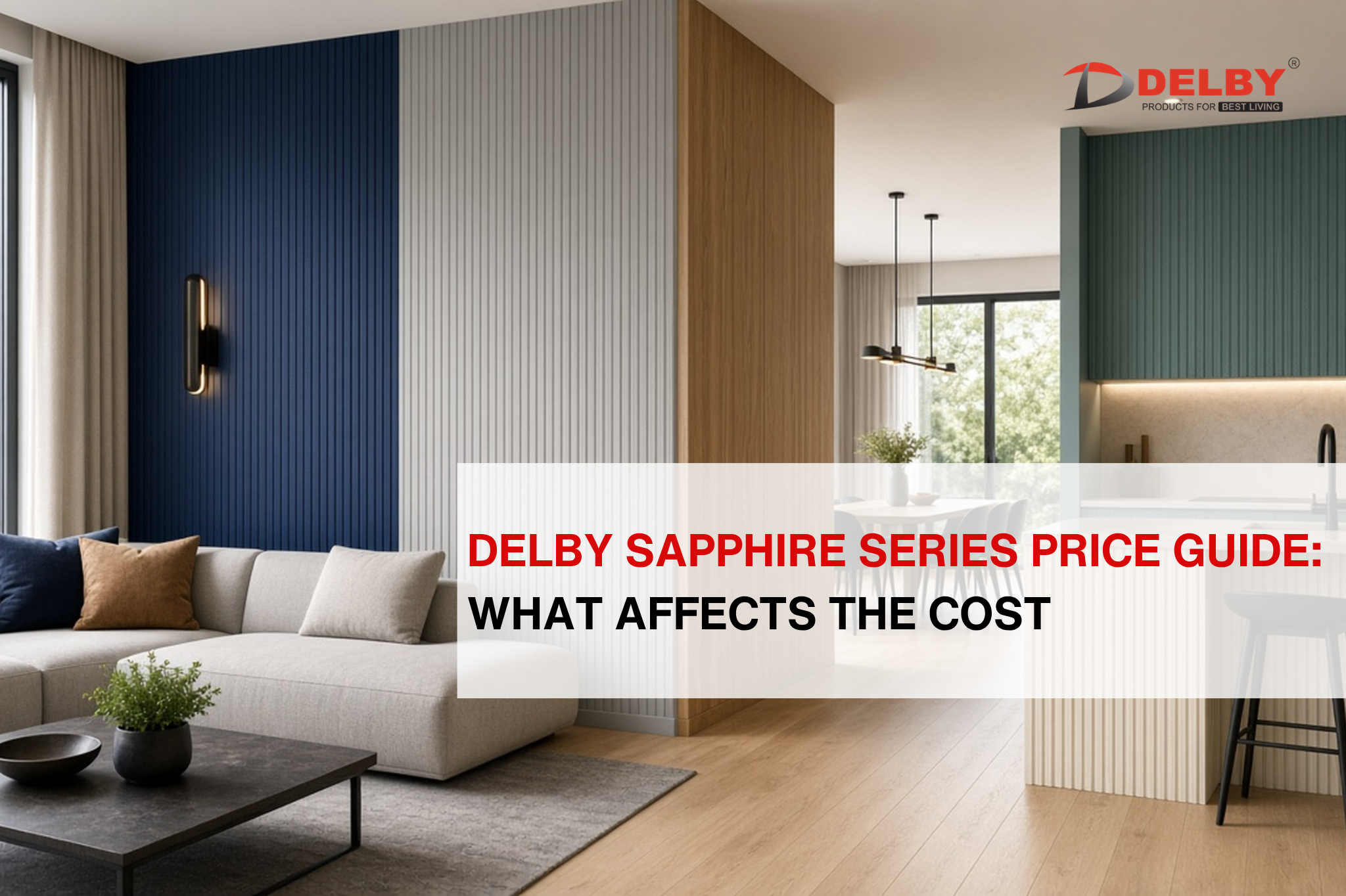
Getting a straight answer on interior renovation costs in India can be an exercise in patience. Walk into three different hardware shops, and you will likely hear three completely different pricing structures. One vendor quotes per plank, a local contractor gives an all-inclusive per-square-foot estimate, and an interior designer hands over a quote with separate line items for timber framing, perimeter trims, and concealed fixing hardware.
If you are planning to renovate using Delby’s flagship Sapphire Series collection (panel codes DB-1201 through DB-1299), pinning down your actual budget comes down to understanding what goes on behind the panels.
The baseline Sapphire Series price is built on consistent, factory-controlled extrusion manufacturing. However, what you pay at the end of the day covers more than just the PVC resin planks. This guide breaks down the core variables influencing your final invoice, walks through realistic sample budgets, and explains how to get a transparent, itemized quote from your local dealer.
What Determines the Real Cost of Delby Sapphire Panels?
A finished PVC wall or false ceiling involves multiple material and labor components. These five factors have the biggest impact on your total spend:
1. Surface Finish and Texture
The Sapphire Series features 29 distinct finishes, but they do not all share the same production process:
- Solid Monochromes & Basic Pastels: Standard neutral shades—such as plain whites, creams, and light greys—use direct surface laminations that keep material costs at the baseline.
- Textured & Embossed Woodgrains: Realistic reproductions of teak, walnut, or smoked oak require specialized hot-stamp foils and tactile embossing rollers to mimic real wood grain.
- High-Gloss Stone & Metallic Finishes: Reflective, scratch-resistant protective topcoats require higher-grade decorative films, adding a slight price premium over standard matte planks.
2. Room Size and Order Volume
Covering a single 10×10 ft living room accent wall (around 100 sq. ft.) falls under standard retail pricing. On the other hand, commercial fit-outs—such as office cabins, clinics, or multi-room residential renovations needing 1,000+ sq. ft.—qualify for bulk trade pricing. Distributors and direct dealers generally offer better per-plank rates when shipping full, sealed factory box packs.
3. Framing Battens and Wall Preparation
PVC panels use an interlocking tongue-and-groove system that needs a level, secure backing to latch onto:
- Direct-to-Wall Adhesive: Only viable if your existing wall is completely plumb, smooth, and dry. Panels mount directly using heavy-duty construction adhesive and starter clips.
- Treated Timber Battens: The standard residential approach involves fixing 1×1.5-inch pine or hardwood battens spaced 16 to 24 inches apart. This adds roughly ₹8 to ₹14 per sq. ft. for timber and fasteners.
- Galvanized Iron (GI) Framing: For ceilings or walls dealing with active moisture and seepage (seelan), lightweight steel sections or GI perimeter channels are the smarter choice. Metal framework will not rot, warp, or rust, adding roughly ₹12 to ₹20 per sq. ft. to the rough-in budget.
4. Edge Trims and Corner Profiles
A clean panel job requires finished edges. Depending on the room layout, finishing accessories usually make up 8% to 15% of your raw material bill:
- Starter / U-Channels: Seal starting and ending edges along baseboards, tiles, or cornices.
- Inner & Outer Corner Trims: Ensure crisp 90-degree transitions around room corners, pillars, and window reveals.
- Cornice / Crown Moldings: Provide a clean decorative transition where wall panels meet the ceiling.
5. Freight and Regional Logistics
Delby manufactures its interior cladding systems out of Ludhiana, Punjab. Transport costs vary depending on the distance between the plant, regional redistribution hubs, and your local retail dealer. Shipments traveling to South, East, or coastal regions carry modest transit charges compared to North Indian distribution networks.
Base Material vs. Turnkey Installed Cost
A common budgeting pitfall is confusing the bare panel price with the completed, installed cost.
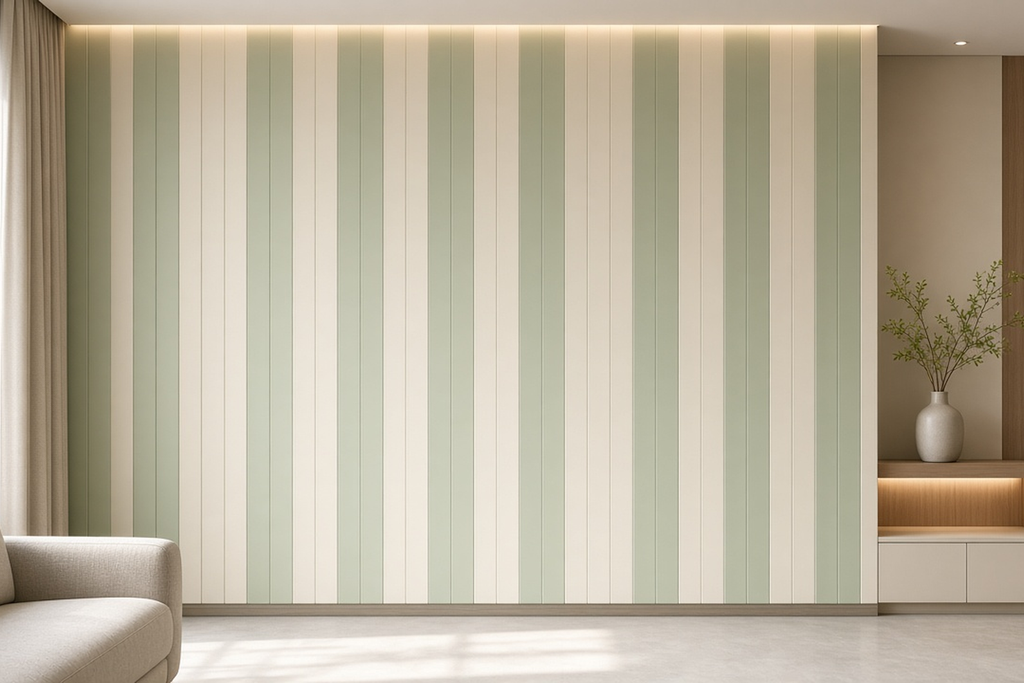
While wholesale reference rates for standard 8mm Delby panels start around ₹10 per square foot (factory-gate material reference), a finished, professionally installed wall involves hardware, framework, edge trims, and labor:
| Project Component | Typical Cost Range (Per Sq. Ft.) | What It Covers |
| Base Sapphire Series Panels | ₹20 – ₹38 | 8mm heavy-duty interlocking PVC planks |
| Framing (Timber or GI Channel) | ₹8 – ₹20 | Battens, anchor fasteners, and leveling shims |
| Finishing Trims & Adhesives | ₹4 – ₹9 | U-channels, corner angles, screws, and silicone |
| Carpentry & Installation Labor | ₹12 – ₹18 | Framing setup, panel interlocking, and cutouts |
| Estimated Turnkey Total | ₹44 – ₹85 | Fully completed, ready-to-use wall or ceiling |
Note: These estimates reflect current market averages across urban and semi-urban Indian interior projects. Final costs depend on your ceiling height, wall condition, and local labor rates.
How Does Sapphire Series Compare to Other Wall Finishes?
Evaluating long-term value means looking beyond day-one installation expenses. Here is how the Sapphire Series stacks up against traditional finishes over a 5- to 10-year period:
| Wall Finish Option | Typical Installed Cost (Sq. Ft.) | Upkeep & Maintenance | Performance in Damp / Humid Conditions |
| Delby Sapphire Series | ₹45 – ₹85 | Wipe clean with a damp cloth; zero recurring costs | 100% waterproof; impervious to seepage and moisture |
| Premium Acrylic Paint | ₹25 – ₹45 | Needs repainting every 2–3 years | Prone to flaking, blistering, and efflorescence (shora) |
| Vinyl Wallpaper | ₹50 – ₹120 | Re-gluing seams every 2–4 years | Traps humidity underneath; peels along edges |
| Natural Wood Veneer | ₹180 – ₹350 | Polishing or varnishing every 3–5 years | Vulnerable to termite infestation, warping, and swelling |
| Italian Marble / Granite Cladding | ₹300 – ₹700+ | Requires routine sealing and buffing | Heavy dead weight; porous stones absorb stains easily |
Standard paint has a lower initial cost, but damp walls, hairline settling cracks, and everyday scuffs often force a repaint every few seasons. PVC cladding creates an impervious barrier that stays intact without ongoing maintenance.
Real-World Project Budget Scenarios
To help you calculate your own budget, here is how material and labor break down for three common residential projects:
Scenario 1: Living Room TV Accent Wall
- Dimensions: 10 ft wide × 9 ft high (90 sq. ft.)
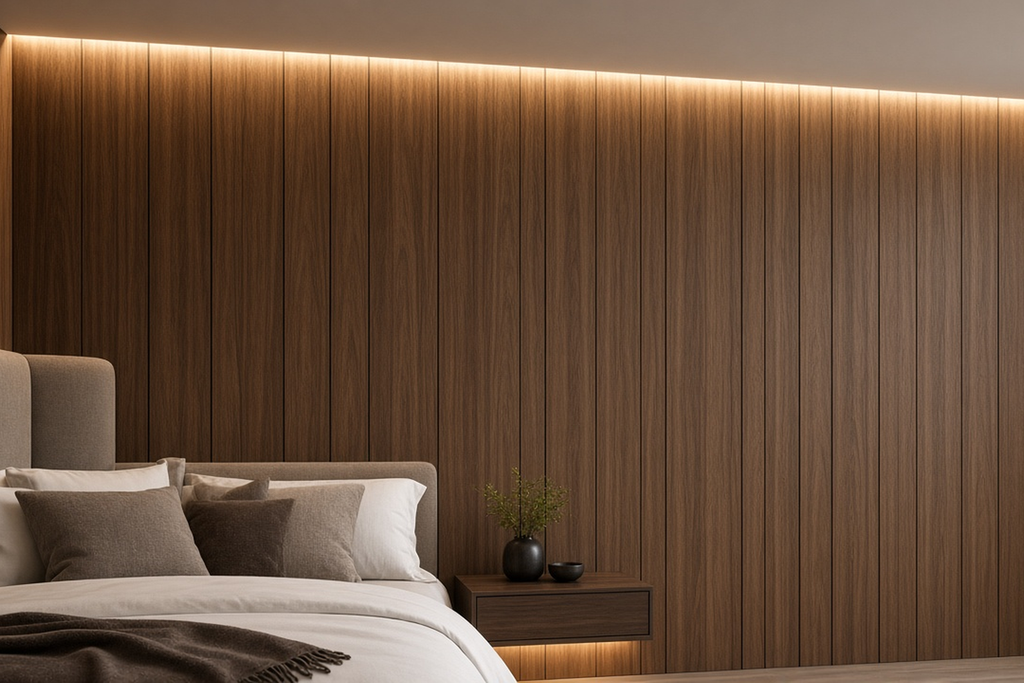
- Setup: Premium woodgrain finish (DB-1201 series), treated pine framework, hidden wire conduit chase, perimeter LED backlighting gap, and matching edge trims.
- Panels & Trims: ₹1,800 – ₹2,600
- Framing & Fasteners: ₹900 – ₹1,200
- Carpentry & Electrical Chasing: ₹1,500 – ₹2,200
- Estimated Total: ₹4,200 – ₹6,000 (Typically completed in 1 day)
Scenario 2: Master Bedroom Headboard Feature Wall
- Dimensions: 12 ft wide × 10 ft high (120 sq. ft.)
- Setup: Two-tone design combining textured fabric-look panels with darker vertical accents, perimeter U-channels, and masonry-anchored timber battens.
- Panels & Trims: ₹2,400 – ₹3,400
- Framing & Fasteners: ₹1,100 – ₹1,600
- Installation Labor: ₹1,800 – ₹2,600
- Estimated Total: ₹5,300 – ₹7,600
Scenario 3: Bathroom or Balcony False Ceiling
- Dimensions: 6 ft wide × 8 ft long (48 sq. ft.)
- Setup: Moisture-proof GI ceiling grid, neutral white Sapphire Series panels, cutouts for 2 LED downlights and an exhaust vent.
- Panels & Perimeter Angles: ₹1,000 – ₹1,400
- GI Metal Framework: ₹700 – ₹1,000
- Ceiling Labor & Cutouts: ₹1,000 – ₹1,400
- Estimated Total: ₹2,700 – ₹3,800
5 Practical Steps to Secure an Accurate Dealer Quote
When speaking with local dealers, contractors, or distributors, keep these five steps in mind to avoid unexpected price spikes mid-project:
- Calculate the True Surface Area: Measure total wall widths and heights using a standard tape measure. Deduct major open spaces like French doors, large windows, or built-in wardrobes so your dealer does not over-bill on square footage.
- Factor in 8% to 10% Off-Cut Wastage: Standard Sapphire Series panels measure 12 inches wide by 10 feet long (10 sq. ft. per plank). If your ceiling is 9 feet high, each vertical plank leaves a 1-foot off-cut. Account for an 8% to 10% material buffer for end trims and pattern matching.
- Quote Specific Catalog Codes: Rather than asking for a generic “teak finish” or “grey panel,” reference exact shade codes (such as DB-1205 or DB-1240). This prevents unexpected price jumps later if the shade you choose uses a premium decorative film.
- Insist on an Itemized Quote: Ensure your quote explicitly separates:
- Base panel square footage or plank count
- Linear foot rate for trims (L-angles, U-channels, crown profiles)
- Framework materials (pine battens vs. GI sections, screws, clips)
- Carpenter installation labor
- Local cartage and delivery charges
- Check Physical Swatches in Your Room’s Lighting: Laminated finishes can look quite different under bright showroom spotlights compared to your home’s ambient or warm lighting. Ask your dealer for a physical sample swatch to hold against your existing floor tiles, furniture, and wall colors before finalizing the order.
Frequently Asked Questions
Does the base Sapphire Series price include installation?
No. Standard catalog and wholesale prices cover raw panel supply only. While many authorized dealers work directly with trained carpenters to offer complete turnkey supply-and-fit packages, always verify whether labor and framing are included in your quote.
Why do prices vary across the 29 Sapphire Series finishes?
Every plank shares the same 8mm rigid extruded PVC core. However, surface laminations differ in complexity. Deep tactile woodgrains, multi-layer metallic foils, and high-gloss stone textures cost more to produce than standard solid white or pastel films.
Is ceiling paneling more expensive than wall cladding?
Raw panel costs are identical for both applications. However, false ceiling work generally costs ₹5 to ₹10 more per sq. ft. for labor and framework due to overhead working conditions, ladder scaffolding, and the need for a rigid metal or timber suspension grid.
How do I figure out the number of panels needed?
Divide your total wall width (in feet) by the width of a single panel (1 foot / 12 inches). For example, a wall measuring 12 feet wide requires 12 panels. If your ceiling height is 10 feet or less, 12 standard 10-foot planks cover the space. Add 1 or 2 extra planks to account for socket cutouts and edge trimming.
Can I install Sapphire Series panels as a DIY project?
If you have basic DIY experience, a drill, a spirit level, and a fine-tooth handsaw, fixing these tongue-and-groove planks over an existing flat wall is manageable. For overhead ceiling grids, concealed wiring, or rooms with multiple outside corners, hiring an experienced installer ensures straight sightlines and tight seams.
