



Your cart is currently empty!
Sapphex Exterior Cladding: Design Ideas for Homes, Offices & Commercial Facades

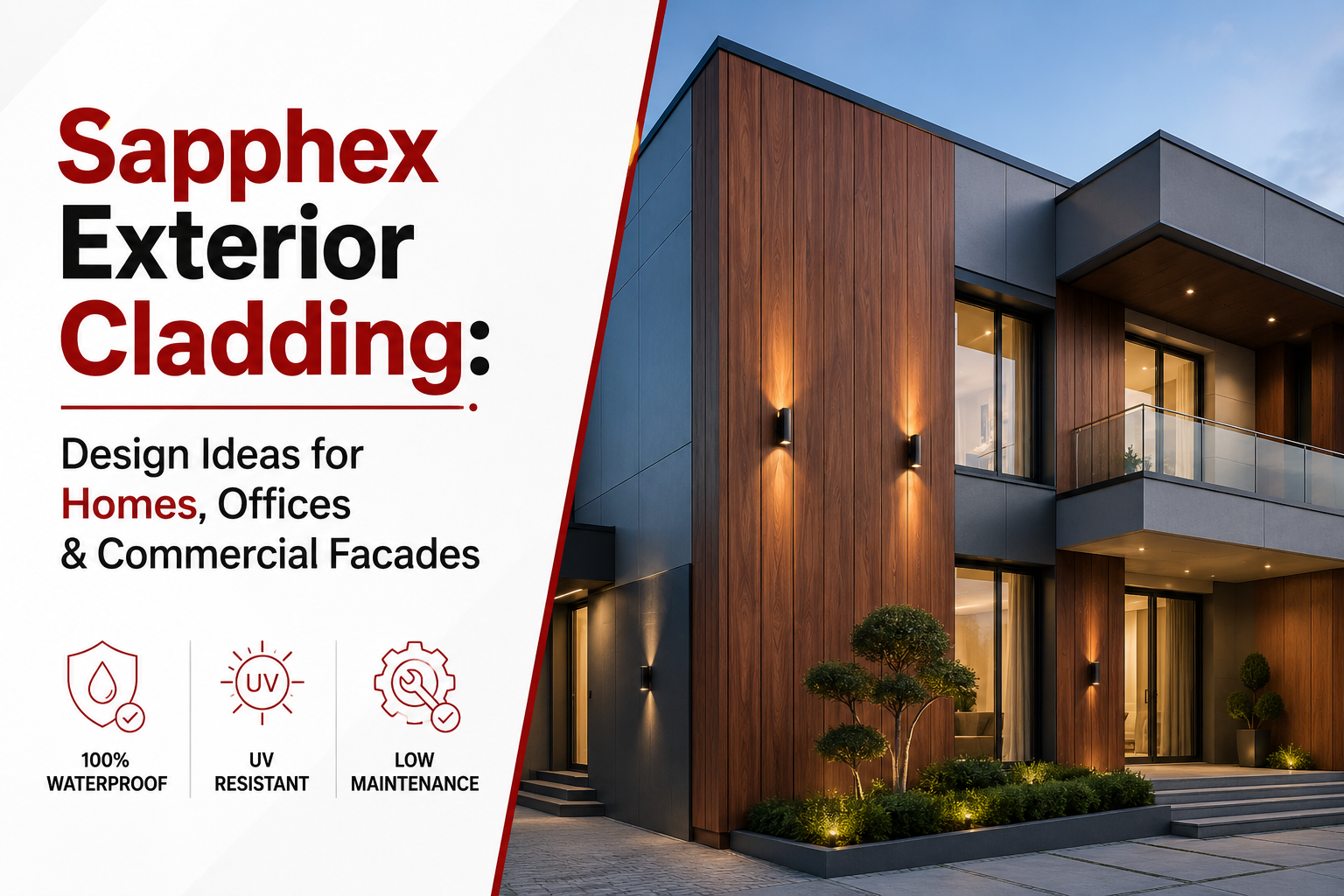
A facade is much more than a protective outer skin for a building—it is the very first visual impression, establishing architectural character before anyone walks through the front door. However, building exteriors in regions with extreme climate swings face relentless punishment: scorching peak summers, heavy monsoon rains, corrosive airborne pollutants, and rapid seasonal temperature variations.
Traditional building materials struggle under these conditions. Standard exterior emulsions fade, peel, and crack every few seasons. Natural wood warps, rots, and invites termites. Porous stone absorbs moisture, leading to stubborn salt efflorescence and algae blooms.
To solve this challenge, Delby introduced Sapphex Wall Cladding Panels—an exterior-grade architectural facade system that combines structural resilience with elevated design flexibility.
Whether you are designing a contemporary villa, remodeling an outdated retail elevation, or planning a multi-story corporate headquarters, this design guide explores how to leverage Sapphex panels to create long-lasting, striking facades.
Why Sapphex Is Built for Indian Facades
Sapphex is not an interior decorative panel adapted for outdoor use; it is purpose-engineered from the ground up to endure direct solar radiation, torrential rain, and humidity.
- UV-Stabilized Core Formulation: Blended with industrial-grade light stabilizers and titanium dioxide, Sapphex panels resist the solar radiation that turns typical finishes brittle, chalky, or discolored.
- 100% Waterproof Rainscreen Barrier: Because the polymer structure is non-porous, water cannot penetrate the panels. Rain simply runs off the exterior face, protecting inner masonry from dampness and water seepage.
- Dimensional & Thermal Stability: Formulated with impact modifiers, Sapphex panels safely expand and contract through seasonal temperature shifts without cracking, bowing, or warping.
- Stain & Pollution Resistance: The dense, non-porous outer layer repels road dust, exhaust soot, and industrial grime. Cleaning the facade requires only an occasional rinse with water.
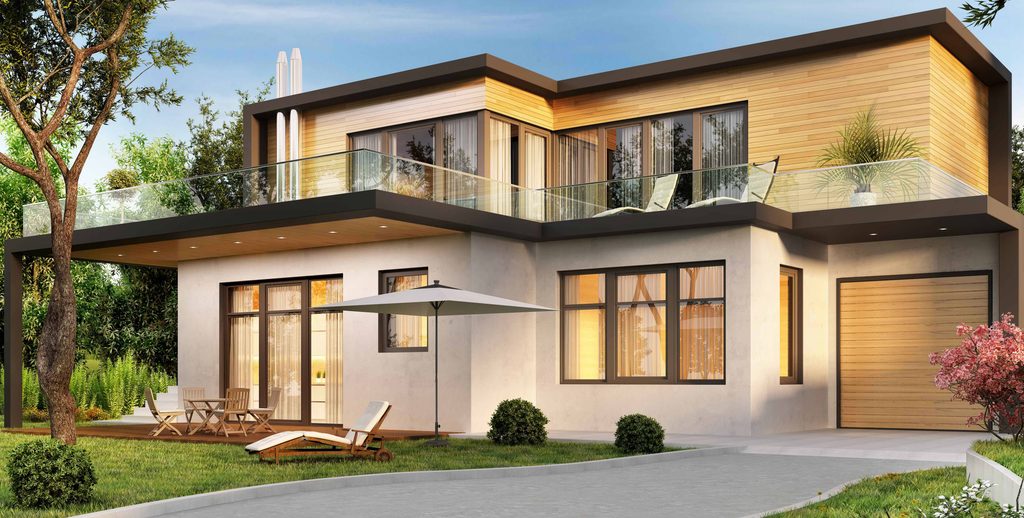
4 Transformative Exterior Cladding Design Ideas for Homes
Residential architecture is moving away from flat, single-tone plastered walls toward dynamic, textured elevations that incorporate depth, warmth, and shadow lines.
1. The Monolithic Full Facade Wrap
For minimalist, contemporary residential homes, wrapping key structural volumes completely in exterior wall cladding creates a clean, cohesive envelope.
- Design Execution: Pair warm vertical wood-grain Sapphex panels across prominent two-story cantilevers with contrasting charcoal window frames and large glazing.
- Practical Advantage: Eliminates the ongoing cost and disruption of repainting the main building facade every few years.
2. Architectural Accent Panels & Entrance Portals
If a full building wrap does not fit your aesthetic vision, use Sapphex strategically as an accent material to define specific elevation elements.
- Design Execution: Frame the main entryway, double-height foyer walls, or cantilevered balcony boxes with fluted Sapphex panels. When illuminated by warm up-down exterior wall sconces, the vertical fluting creates textured shadow lines that add visual interest after sunset.
- Practical Advantage: Draws focus to architectural entry points while pairing smoothly with traditional stone veneer, glass railings, or smooth plaster finishes.
3. Weatherproof Boundary Walls and Gate Pillars
Compound walls and entrance gate pillars are heavily exposed to ground-level splashes, monsoon runoff, and garden sprinklers, making them the first surfaces to peel and harbor green moss.
- Design Execution: Clad perimeter walls and gate columns in stone-look or dark-walnut Sapphex panels, finished with crisp metal coping trims along the top edge.
- Practical Advantage: Creates an upscale perimeter barrier that remains free from efflorescence, peeling paint, and damp stains year after year.
4. Balcony Recesses, Cantilever Soffits, and Terraces
Semi-outdoor zones like covered balconies, rooftop terraces, and deep window reveals are constantly exposed to direct sunlight and wind-driven rain.
- Design Execution: Install lightweight Sapphex panels across both the vertical walls and the overhead ceiling soffits of deep balconies to achieve a seamless, continuous wood-lined appearance.
- Practical Advantage: Real timber installed on outdoor ceilings quickly warps and darkens due to humidity; Sapphex provides the organic look of natural wood with zero rot or varnish requirements.
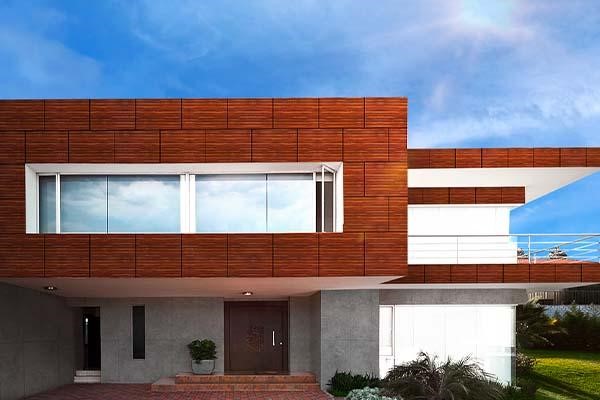
Sapphex for Offices & Commercial Facades
When planning commercial properties, exterior aesthetics directly impact tenant attraction, brand perception, and asset value. Commercial building managers look for the best exterior wall panels for commercial buildings to minimize lifetime operating expenses.
Corporate Headquarters & IT Parks
Large commercial complexes require materials that deliver flat, uniform visual lines without the “oil-canning” (surface waviness) or joint discoloration often seen on older metal panel installations. Sapphex panels provide clean geometric lines and integrate easily with curtain wall glazing systems, giving corporate offices a professional, modern presence.
Retail Storefronts & Automobile Showrooms
Storefronts in high-traffic urban corridors deal with continuous exposure to vehicular exhaust, road grime, and dust. Sapphex’s non-porous exterior surface resists soot adhesion, allowing commercial retail facades to maintain a sharp, clean appearance with minimal maintenance.
Hospitality, Resorts & Outdoor Dining Venues
Boutique resorts, rooftop lounges, and poolside hospitality zones need warm, inviting textures like natural timber, but high ambient humidity and water splashing quickly destroy organic wood. Sapphex panels deliver the rich grain and warmth of architectural timber while remaining completely unaffected by chlorine, salt air, or persistent moisture.
Sapphex vs. Delby’s Interior Ranges: What’s the Difference?
To ensure long-term performance, choose panel collections specifically formulated for their intended environment. Delby manufactures dedicated ranges for both interior and exterior applications:
- ASSA & ORRO Collections (Interior Focus): These collections feature bamboo charcoal polymer cores engineered for indoor climate-controlled environments. They deliver acoustic comfort, indoor air safety, lightweight handling, and refined luxury textures suited for living rooms, bedroom feature walls, corporate boardrooms, and interior ceilings.
- Sapphex Collection (Exterior Dedicated): Engineered exclusively for exterior facades. Sapphex uses heavy-duty, weather-grade polymer extrusions loaded with UV inhibitors, impact modifiers, and self-extinguishing fire-retardant additives. They are installed over an aluminum or galvanized iron (GI) sub-frame grid to provide a ventilated rainscreen barrier.
Selecting the right collection is simple: choose Sapphex for building exteriors, boundary walls, and exposed soffits; choose ASSA or ORRO for interior spaces.
Technical Specifications & Comparison
To understand how Sapphex compares with traditional exterior cladding options, review this technical performance summary:
| Performance Characteristic | Sapphex Exterior Panels | Conventional Exterior Paint | Aluminium Composite (ACP) | Natural Stone Cladding |
|---|---|---|---|---|
| Water Absorption Rate | 0.0% (Impermeable) | Absorptive over time | Low (Joint sealants fail) | Moderate to High |
| UV Resistance | High (UV-Stabilized) | Chalks & fades quickly | Good (Subject to oxidation) | Natural UV stability |
| Structural Dead Load | Lightweight (~4–6 kg/m²) | Negligible | Light (~5.5–7.5 kg/m²) | Very Heavy (45–85+ kg/m²) |
| Installation System | Interlocking dry-clad grid | Wet liquid coating | Riveted tray system | Wet mortar / heavy brackets |
| 10-Year Maintenance | Minimal (Water wash) | High (Repaint 2–3 times) | Moderate (Sealant repairs) | High (Periodic resealing) |
| Termite & Pest Immunity | 100% Immune | N/A | 100% Immune | 100% Immune |
| Thermal Insulation | High (Low conductivity) | None | Low (Conducts heat) | Moderate thermal mass |
Step-by-Step Installation Best Practices
Achieving a clean, long-lasting installation with Sapphex panels relies on standard dry-clad installation techniques:
- Sub-Frame Preparation: Mechanically anchor vertical Aluminum or GI section runners onto the structural masonry at 300 mm to 400 mm intervals. Ensure the framing grid is level and plumb.
- Air Gap Integration: The sub-frame naturally leaves a 25 mm to 40 mm cavity between the wall and the cladding. This ventilated air gap prevents moisture trapping and reduces summer heat transfer into the building interior.
- Corner & Trim Profiles: Fit perimeter J-channels, drip edges, and corner trims before panel installation to conceal cut ends and ensure controlled rainwater runoff.
- Sequential Interlocking: Secure each panel to the framework using concealed stainless-steel mounting clips and screws along the hidden fastening flange, sliding each consecutive panel into the interlocking groove.
- Thermal Expansion Allowance: Always leave a 2 mm to 4 mm clearance inside end-trims to allow natural expansion and contraction during seasonal weather extremes.
Frequently Asked Questions
What are Sapphex Wall Cladding Panels made of?
Sapphex panels are manufactured from high-density, exterior-grade PVC resin combined with titanium dioxide UV stabilizers, impact modifiers, and fire-retardant compounds. This specialized composition ensures the panels will not rot, warp, chip, or fade under continuous outdoor exposure.
Can Sapphex panels be installed over old building walls?
Yes. Sapphex panels mount directly onto a lightweight aluminum or galvanized iron batten system, allowing them to be installed over existing plaster, aged brick, or weathered paint without messy hacking work.
Are Sapphex panels fire-retardant?
Yes. Sapphex exterior panels are formulated with self-extinguishing, fire-retardant additives that comply with standard exterior building safety requirements, preventing flame propagation across the facade.
How do I clean and maintain Sapphex exterior cladding?
Maintenance is simple. Unlike natural wood or stone that requires seasonal resealing, Sapphex panels have a smooth, non-porous exterior. An occasional rinse using a standard garden hose or mild soapy water is all that is needed to clear away road dust and urban grime.
Can Sapphex panels handle coastal or high-humidity climates?
Yes. Because Sapphex panels contain zero metal or organic timber fibers, they are completely immune to rust, salt-air corrosion, termite infestation, and mold growth, making them well-suited for coastal environments.
Bring Your Facade Vision to Life
Whether you are designing a private family home, an office complex, or a hospitality venue, Delby’s Sapphex Wall Cladding Panels offer the ideal balance of outdoor durability, low maintenance, and design versatility.
Need design guidance for your specific elevation?
Share your elevation drawings, building dimensions, or project photos with our architectural technical team. We will help you select the ideal Sapphex profiles, calculate panel quantities, and provide physical samples for your project.
